

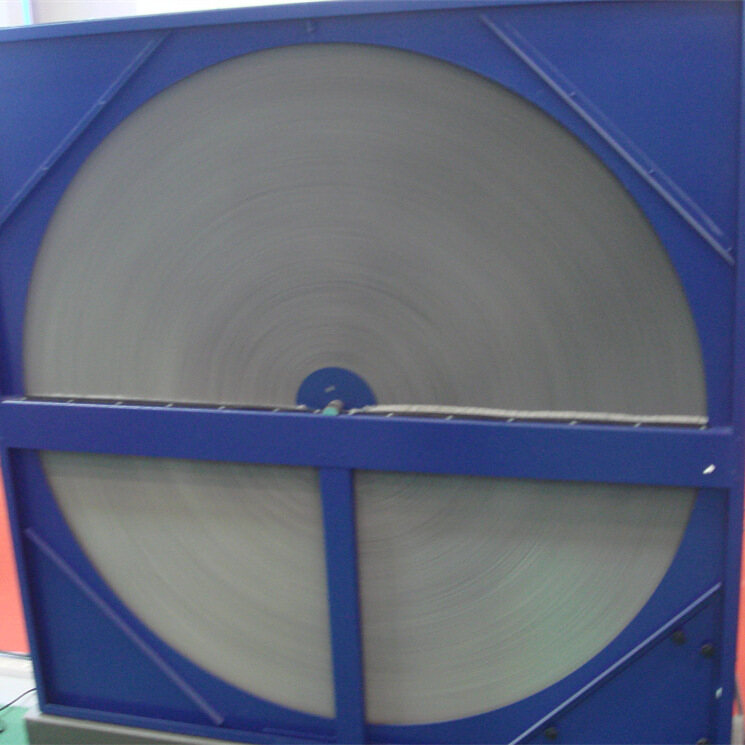
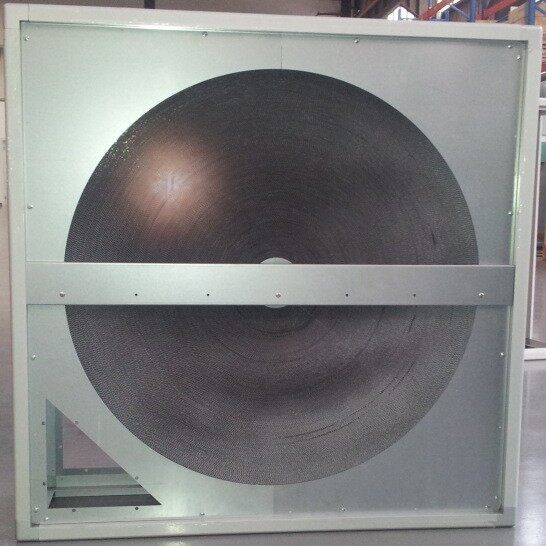
The material surface of the energy storage core component of the silica gel heat recovery rotor is coated with inorganic silica gel. By taking advantage of the nano-scale voids and pores within silica gel and its strong adsorption capacity, it achieves the adsorption of water molecules in the air. Silicone gel, also known as silicic acid glue or silicic acid gel, is a specially synthesized rubber material, whose main component is silicon dioxide. In an air flow with a humidity of 60%, the moisture contained in the gas can be absorbed up to 50% of its mass. It has stable chemical properties, is insoluble in water and non-toxic and harmless. It has good temperature adaptability and anti-aging properties, and can be used for a long time in natural environments. However, due to the lack of strict regulations on the size of the internal voids and pores, it has no screening ability for the adsorption of all molecular types contained in the air. It can not only accept water molecules with a diameter of ≤ 3A, but also adsorb various gas molecules with a diameter greater than 3A (such as carbon dioxide, propane, isopropanol, xylene, odorous bacteria, viruses, ammonia and other pollutants). The probability of cross-contamination cannot be effectively prevented.
The silica gel heat recovery rotor, due to the implementation of a special process with a silica gel coating on the surface of the aluminum foil, not only ensures the efficient conversion of temperature efficiency but also transfers its potential efficiency by adsorbing water molecules through silica gel. Meanwhile, for high-humidity environments, it can effectively regulate and convert humidity. However, after long-term use, its nanoscale voids and pores are filled with molecules of different diameters, and the adsorption effect will gradually decline. It must be treated by a regeneration process to be restored.


