

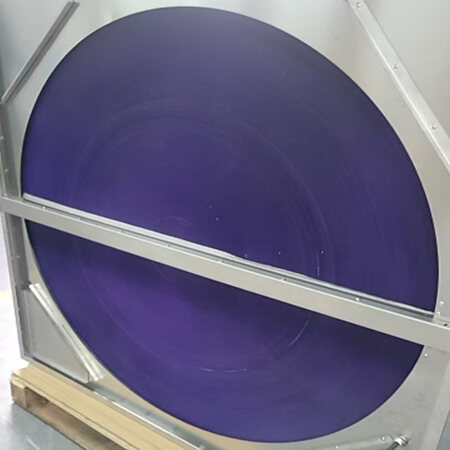

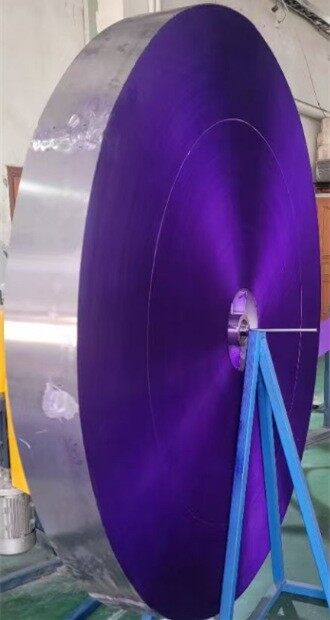
Marine hot runners are widely used in international business cruise ships, scientific research and military operations, as well as international ocean freight transportation and other occasions. In the Marine environment where ships navigate globally, the Marine climate often occurs in conditions of high and low temperatures and high humidity, and it is also confronted with salt spray corrosion. When designing Marine air conditioning systems, the indoor environment standards for ship cabins aim to achieve an indoor air standard that is close to constant temperature and humidity, fresh and rich in oxygen. Considering the environmental, conditions and purposes of the related products' application, the materials of the thermal rotor core energy storage components are mostly selected as aluminum-based materials with a 3A molecular sieve coating. As the surface of the aluminum foil base material has a molecular sieve coating, it can play an anti-corrosion role. At the same time, epoxy anti-corrosion materials must be sprayed on both windward sides to prevent the base material from being exposed to direct contact with Marine air. To achieve high recovery efficiency of sensible heat, latent heat and total heat, as well as effective humidity transfer, thereby reducing the energy matching required for cooling, heating and humidity adjustment, and reaching the goal of energy reduction, consumption reduction, green energy conservation and environmental protection.


