

In-line Duct Fan
Enchoy:Your Professional In-line Duct Fan Manufacturer!
Enchoy (Suzhou) Ventilation System Co., Ltd., a Sino-Finnish joint venture high-tech enterprise, is dedicated to promoting energy-saving and environmental protection concepts and improving living environments. It is a professional ventilation system equipment supplier that integrates research and development, production, testing, sales, and after-sales services. The company introduces leading Finnish manufacturing technology, follows European advanced management concepts and models, and combines domestic market demands to strengthen product research and development and quality control.


Why Choose Us
Our Product
Central fresh air system, haze removal fresh air machine, heat exchange fresh air machine, dehumidifier, humidifier, all-air integrated machine, rotary heat recovery fresh air machine, high-efficiency rotary heat recovery heat exchanger, cabinet-type total heat fresh air machine, constant oxygen total heat fresh air machine, mobile dehumidifier, duct fan.
Our Services
With rich experience and one-to-one service, we can help you choose products and answer technical questions. Provide extended warranty services to extend the equipment warranty period, allowing customers to use the products without worry.
Our Certificate
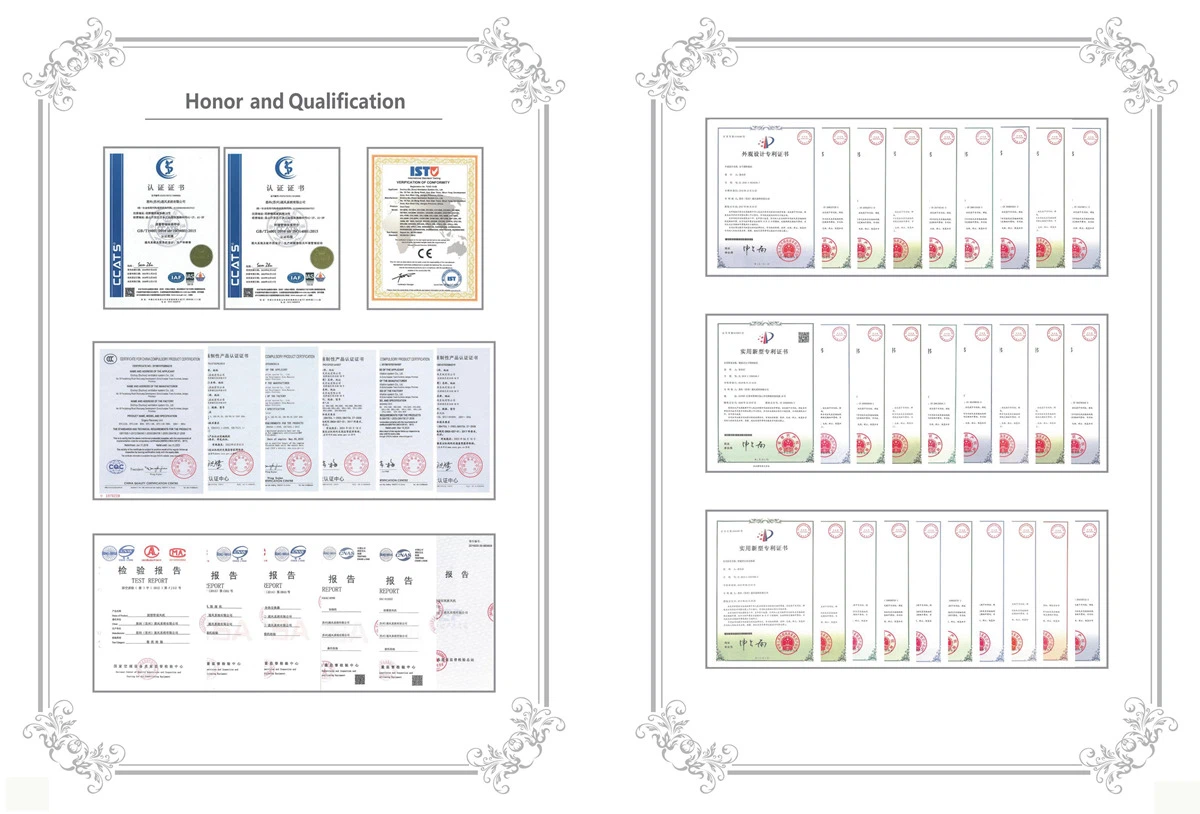
Enchoy (Suzhou) Ventilation System Co., Ltd. has passed multiple certifications including ISO9001:2015 Quality Management System Certification, ISO14001:2015 Environmental Management System Certification, 3C, and CE. A number of its product series have obtained national patent certificates.
Production Market
Collaborate with well-known decoration companies to create smart home supporting scenarios. Partner with large real estate developers to provide residential standard or value-added services. In the engineering market, provide centralized fresh air solutions for public buildings such as schools, hospitals, and office buildings.
Specification
|
Product Name |
In-line Duct Fan |
|
Voltage |
110v-220/50-60hz |
|
Case Material |
Galvanized steel |
|
Maximum air volume |
1873m3/h |
|
Maximum pressure |
841Pa |
|
Interface size |
100mm-400mm |
|
Customized support |
OEM, ODM |
Enhanced Airflow Efficiency
One of the most significant benefits of inline duct fans is their ability to maximize airflow efficiency. Their cylindrical shape minimizes friction losses, allowing air to flow smoothly through the ducts. This efficiency is particularly important in systems with long duct runs or high static pressure requirements, where traditional fans may struggle to maintain adequate airflow.
Reduced Noise Levels
Inline duct fans are designed to operate quietly due to their placement within the ductwork. Unlike standard booster fans that can be noisy when activated, inline fans are often insulated and positioned away from living spaces, significantly reducing operational noise. This feature makes them ideal for residential applications where noise sensitivity is a concern.
Versatile Applications
Inline duct fans are not just for homes; they can be used in various settings like workshops, greenhouses, or commercial spaces. They are versatile tools that adapt well to different ventilation needs.
Multiple Intake Points
Inline duct fans can accommodate multiple intake points, which is particularly beneficial for larger spaces like bathrooms or multi-room setups. By using a Y junction, these fans can draw air from different locations, enhancing overall ventilation efficiency.
Long Duct Run Capability
For applications requiring long duct runs—such as connecting a bathroom fan to a roof vent—inline duct fans outperform standard booster fans. Their design allows them to effectively transport air over greater distances without significant loss of pressure or airflow.
Energy Efficiency
Many inline duct fans consume less power compared to traditional fan types while delivering higher airflow rates. This energy efficiency not only leads to lower utility bills but also contributes to a reduced carbon footprint, making them an environmentally friendly choice for both residential and commercial applications.
Improved Indoor Air Quality
By effectively circulating air throughout a space, inline duct fans play a crucial role in improving indoor air quality. They help eliminate stale air and distribute fresh air evenly, reducing the concentration of indoor pollutants and allergens—a vital consideration in environments such as schools and healthcare facilities.
Easy Installation and Maintenance
The compact design of inline duct fans simplifies installation within existing duct systems. Many models feature easily accessible components that facilitate maintenance tasks such as cleaning and servicing, ensuring long-term reliability and performance.
Smart Control Integration
Modern inline duct fans can often be integrated with smart control systems that allow users to adjust settings based on real-time needs. This capability enhances comfort while optimizing energy usage by adjusting fan speed according to occupancy levels or specific environmental conditions.
Application Of In-Line Duct Fan
Residential Ventilation
Inline duct fans are commonly used in residential settings to improve indoor air quality and remove excess moisture. They can be installed in bathrooms, kitchens, laundry rooms, and other areas prone to high humidity or odors. By exhausting stale, moist air and replacing it with fresh, conditioned air, inline fans help prevent mold growth, structural damage, and health issues associated with poor ventilation.
Commercial and Industrial Ventilation
In commercial and industrial settings, inline duct fans play a vital role in maintaining proper ventilation and air quality. They are used in office buildings, restaurants, warehouses, and manufacturing facilities to remove pollutants, control temperature, and distribute fresh air. Inline fans are particularly well-suited for these applications due to their power, efficiency, and ability to move large volumes of air through extensive ductwork systems.
Grow Rooms and Hydroponic Systems
Inline duct fans are essential components in grow rooms and hydroponic systems, where precise control over air circulation, temperature, and humidity is critical for plant growth and health. These fans are used to remove excess heat and moisture generated by grow lights and plants, while also bringing in fresh, CO2-rich air.
HVAC Systems
Inline duct fans are often used in conjunction with HVAC systems to improve overall air circulation and distribution. They can be installed in the ductwork of central heating and cooling systems to boost airflow to specific rooms or areas that may not be receiving adequate ventilation. This can help eliminate hot or cold spots, improve system efficiency, and enhance overall comfort levels in the building.
Components of In-line Duct Fan
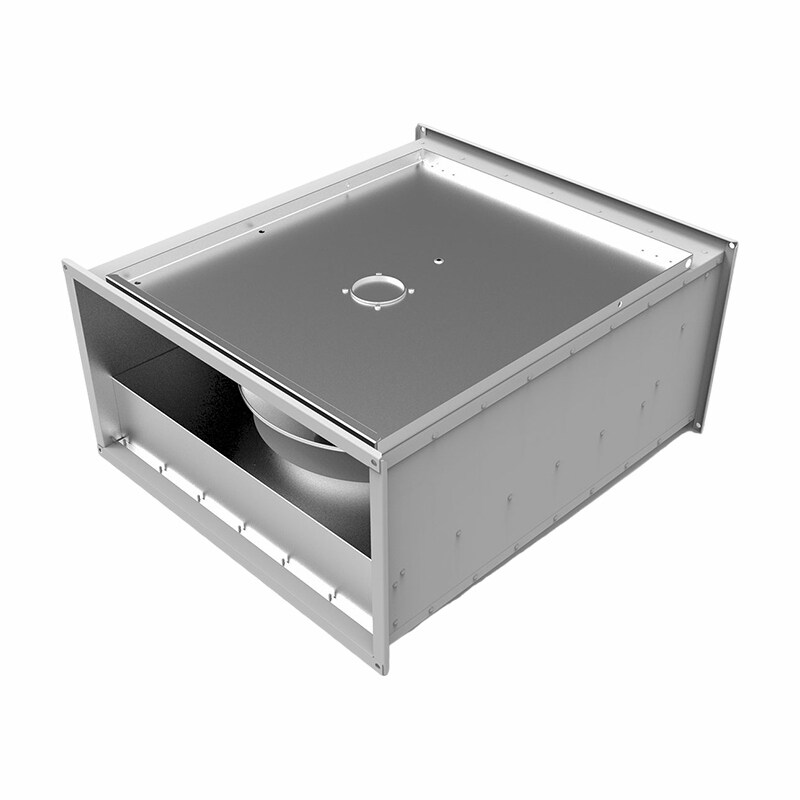
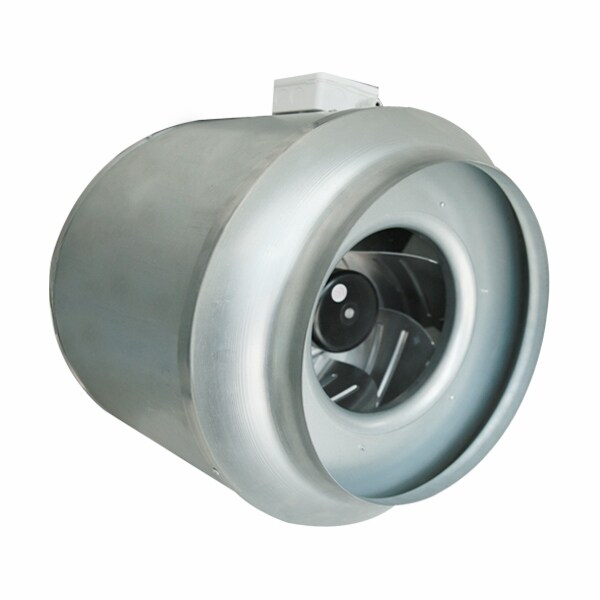
Fan Housing: It is made from durable materials like metal or high-quality plastic to keep the structure rigid and protect fan blades from impact. The housing is typically "fluted" on both ends to allow for the duct be slipped onto the housing shrouds and be secured with duct clamps.
Fan Blades (Impeller): The blades can be angled or curved to enhance airflow and reduce noise. The shape of the fan blade determines how effective it is and how much air pressure drop the fan can handle. The best ratio of airflow volume to noise comes from mixed flow fan blades making one of the most popular shape in duct fan designs.
Fan Motor: The vast majority of duct fans use electric motors which operate on AC or DC current, depending on the power source and application. An EC motor works on DC current but get power from the AC power outlet because the conversion to DC happens inside the fan. Most EC motors come with speed control options, allowing for adjustable airflow rates to meet specific ventilation needs.
Mounting Brackets and Hardware: Securely mounts the fan within the ducting system, ensuring stability and reducing vibrations.
Electrical Wiring and Connections: A power connection needed to switch on the fan.
Bearings: The fan motor may use different types of bearings, such as ball bearings or sleeve bearings, to reduce friction and wear, ensuring smooth operation and longevity.
Noise-Dampening Components: Some inline duct fans include insulation or noise-dampening materials to reduce operational noise, making them more suitable for indoor use where quiet operation is essential.

In-line Duct Fan Installation
Preparing the Ductwork
Ensure your ducts are clean and free of obstructions. Measure and cut them according to the specifications outlined in the fan manual.
Mounting the Inline Duct Fan
Securely mount the fan in the chosen location, following the manufacturer’s guidelines for alignment and spacing.
Connecting the Ducts
Attach the ducts to the fan, ensuring a tight seal. Use foil tape or zip ties to secure the connections and prevent air leaks.
Wiring the Fan
Follow the wiring instructions provided with the fan. Always turn off the power before connecting the wires to ensure safety.
Expert Tips for Better Performance
Balancing Airflow
Achieving well-balanced airflow is key. Adjust dampers and vents to ensure an even distribution of air throughout your space.
Regular Maintenance
Ensure the longevity of your inline duct fan with regular maintenance. Clean the fan blades and inspect the ducts for signs of wear or damage.
Packaging and Shipping


Our Certificate

FAQ
As one of the leading in-line duct fan manufacturers and suppliers in China, we warmly welcome you to buy discount in-line duct fan for sale here from our factory. Good service and quality products are available.
Mixed Flow Fan, Space Saving Duct Fan, 100mm in line fan