

Hey there! I'm a supplier of heat exchanger wheel devices, and I've been getting a lot of questions lately about how these nifty gadgets impact air quality in confined spaces. So, I thought I'd take a deep dive into the topic and share my insights with you all.
First off, let's talk about what a heat exchanger wheel device actually is. In simple terms, it's a device that transfers heat between two air streams without mixing them. It consists of a rotating wheel made of a heat-absorbing material, like aluminum or ceramic. As the wheel rotates, it picks up heat from one air stream and releases it into the other. This process helps to conserve energy by preheating or precooling the incoming air, depending on the season.

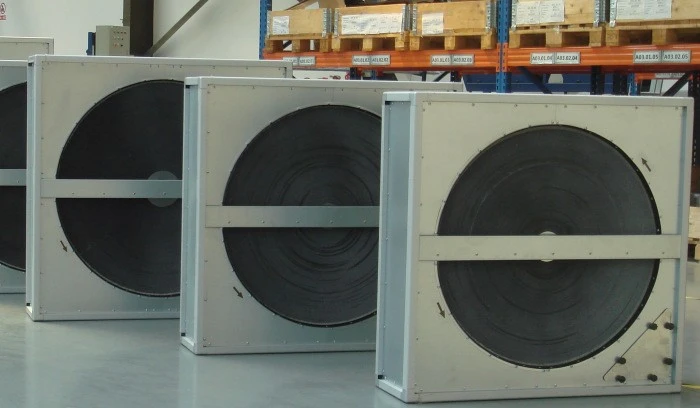
Now, let's get to the main question: what's the impact of a heat exchanger wheel device on air quality in a confined space? Well, there are several ways in which these devices can improve air quality.
1. Temperature and Humidity Control
One of the primary functions of a heat exchanger wheel device is to regulate the temperature and humidity of the air in a confined space. In the winter, it can preheat the cold outside air before it enters the building, reducing the load on the heating system. In the summer, it can precool the hot outside air, making the air conditioning system more efficient.
Maintaining a stable temperature and humidity level is crucial for good air quality. High humidity can lead to the growth of mold and mildew, which can cause respiratory problems and allergies. On the other hand, low humidity can dry out the mucous membranes in the nose and throat, making it easier for viruses and bacteria to infect the body. By controlling the temperature and humidity, a heat exchanger wheel device can create a more comfortable and healthy indoor environment.
2. Ventilation and Air Exchange
Another important aspect of air quality is ventilation. In a confined space, stale air can accumulate, leading to a buildup of pollutants such as carbon dioxide, volatile organic compounds (VOCs), and particulate matter. A heat exchanger wheel device can help to improve ventilation by exchanging the stale indoor air with fresh outdoor air.
The device allows for the transfer of heat between the incoming and outgoing air streams, which means that the energy used to heat or cool the indoor air is not wasted. This makes it a more energy-efficient way to ventilate a building compared to traditional ventilation systems that simply exhaust the indoor air and bring in fresh air without recovering the heat.
3. Filtration
Many heat exchanger wheel devices are equipped with filters that can remove particulate matter, such as dust, pollen, and smoke, from the air. These filters can help to improve air quality by reducing the amount of pollutants that enter the indoor environment.
Some advanced heat exchanger wheel devices also use electrostatic precipitation or activated carbon filters to remove VOCs and other harmful gases from the air. These filters can be particularly effective in removing odors and improving the overall air quality in a confined space.
Types of Heat Exchanger Wheel Devices
There are several types of heat exchanger wheel devices available on the market, each with its own unique features and benefits. Let's take a look at some of the most common types:
- Sensible Heat Exchanger Wheel Device: This type of device transfers only sensible heat, which is the heat associated with a change in temperature. It is typically used in applications where humidity control is not a major concern, such as in industrial buildings or data centers.
- Winded Heat Exchanger Wheel Device: A winded heat exchanger wheel device has a unique design that allows for a higher heat transfer efficiency compared to other types of devices. It is often used in large commercial buildings and hospitals.
- Enthalpy Heat Exchanger Wheel Device: This type of device transfers both sensible heat and latent heat, which is the heat associated with a change in the state of water (e.g., from liquid to vapor). It is ideal for applications where humidity control is important, such as in residential buildings and hotels.
Potential Challenges
While heat exchanger wheel devices offer many benefits for air quality in confined spaces, there are also some potential challenges that need to be considered.
- Maintenance: Heat exchanger wheel devices require regular maintenance to ensure optimal performance. This includes cleaning the wheels, replacing the filters, and checking the seals and bearings. Failure to perform proper maintenance can lead to a decrease in efficiency and an increase in the risk of breakdowns.
- Contamination: If the heat exchanger wheel device is not properly maintained, it can become contaminated with dirt, dust, and other pollutants. This can reduce the effectiveness of the device and even contribute to the spread of airborne diseases.
- Noise: Some heat exchanger wheel devices can produce noise during operation, which can be a nuisance in quiet environments. It is important to choose a device that is designed to operate quietly and to install it in a location where the noise will not be a problem.
Conclusion
In conclusion, a heat exchanger wheel device can have a significant impact on the air quality in a confined space. By regulating the temperature and humidity, improving ventilation, and filtering the air, these devices can create a more comfortable and healthy indoor environment.
However, it's important to choose the right type of device for your specific needs and to ensure that it is properly installed and maintained. If you're considering installing a heat exchanger wheel device in your building, I'd be more than happy to help you find the best solution for your situation.
Whether you're a building owner, a facilities manager, or an HVAC contractor, I invite you to reach out to me to discuss your requirements. We can work together to select the most suitable heat exchanger wheel device for your project and ensure that it is installed and maintained to the highest standards. Let's make your indoor air quality the best it can be!
References
- ASHRAE Handbook of Fundamentals. American Society of Heating, Refrigerating and Air-Conditioning Engineers.
- Indoor Air Quality Guide for Building Owners and Facility Managers. U.S. Environmental Protection Agency.
- Heat Exchanger Design Handbook. K. A. Gernert.