

Hey there! As a supplier of Sensible Rotary Heat Wheels, I've been getting a lot of questions lately about how the wheel diameter affects the performance of these nifty devices. So, I thought I'd take a deep dive into this topic and share my insights with you all.
First off, let's quickly go over what a Sensible Rotary Heat Wheel is. It's a device that's used to transfer heat between two air streams. It rotates continuously, picking up heat from one air stream and releasing it into the other. This process helps in energy recovery, making it a popular choice in HVAC systems, industrial processes, and more.
Now, let's talk about the wheel diameter. The diameter of a Sensible Rotary Heat Wheel can have a significant impact on its performance, and here's how.
Heat Transfer Efficiency
One of the most important aspects of a heat wheel's performance is its heat transfer efficiency. This is basically how well it can transfer heat from one air stream to the other. A larger wheel diameter generally means a larger surface area. And when it comes to heat transfer, surface area is king.
With a larger surface area, there's more contact between the heat wheel and the air streams. This allows for more heat to be transferred in a given amount of time. So, if you're looking for a high - efficiency heat wheel, a larger diameter might be the way to go. For example, in an industrial setting where there's a high demand for heat recovery, a Industrial Rotary Heat Wheel with a larger diameter can significantly improve the overall energy efficiency of the process.
However, it's not all sunshine and rainbows with larger diameters. As the diameter increases, the rotational speed of the wheel might need to be adjusted. A very large wheel rotating too fast can cause turbulence in the air streams, which can actually reduce the heat transfer efficiency. So, it's a bit of a balancing act.
Pressure Drop
Another factor affected by the wheel diameter is the pressure drop across the heat wheel. Pressure drop is the difference in pressure between the inlet and the outlet of the heat wheel. A lower pressure drop is generally better because it means less energy is needed to push the air through the system.
A smaller diameter heat wheel typically has a lower pressure drop. This is because the air has a shorter distance to travel through the wheel. In a system where energy consumption for air movement is a concern, a smaller diameter Winded Rotary Heat Wheel might be a better choice.
On the other hand, a larger diameter wheel can have a higher pressure drop. But if the system is designed to handle this additional pressure, the benefits of increased heat transfer efficiency might outweigh the drawback of the higher pressure drop.
Airflow Capacity
The airflow capacity of a Sensible Rotary Heat Wheel is also influenced by its diameter. Airflow capacity refers to the amount of air that can pass through the heat wheel per unit of time.
A larger diameter wheel can generally handle a higher airflow rate. This is because there's more space for the air to flow through. In applications where there's a large volume of air that needs to be treated, such as in large commercial buildings or industrial facilities, a larger diameter heat wheel can ensure that the system can keep up with the demand.
But again, it's not just about the size. The design of the heat wheel, including the shape of the channels and the material used, also plays a role in determining the airflow capacity.
Installation and Space Requirements
Let's not forget about the practical aspects of installation. The diameter of the heat wheel can have a big impact on where and how it can be installed.
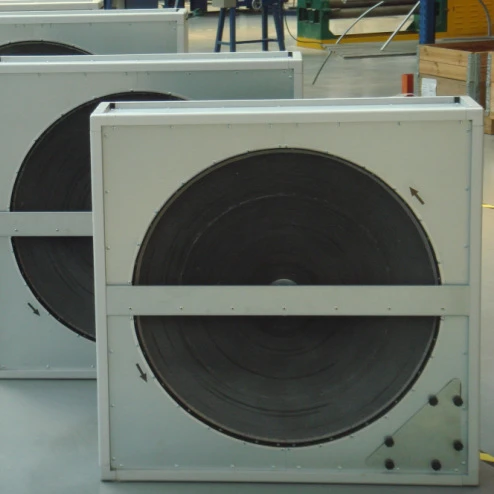
A larger diameter wheel obviously takes up more space. This means that you need to have enough room in your system to accommodate it. In some cases, you might need to make modifications to the existing ductwork or the installation area.
On the other hand, a smaller diameter wheel is more compact and easier to install. It can be a great option for retrofit projects or systems where space is limited. For example, an Aluminum Rotary Heat Wheel with a smaller diameter can be a good choice for upgrading an existing HVAC system without major modifications.

Cost
Cost is always a consideration when it comes to purchasing a Sensible Rotary Heat Wheel. Generally, a larger diameter wheel is more expensive. This is due to the increased amount of material used in its construction and the more complex manufacturing process.
However, you also need to consider the long - term savings. A more efficient heat wheel can lead to significant energy savings over time, which can offset the initial higher cost. So, it's important to do a cost - benefit analysis based on your specific needs and usage.
Maintenance
Maintenance is another aspect affected by the wheel diameter. A larger diameter wheel might require more maintenance due to its size and complexity. There are more components to check and clean, and accessing certain parts of the wheel might be more difficult.
A smaller diameter wheel, on the other hand, is usually easier to maintain. It's more accessible, and the maintenance tasks are generally less time - consuming.
In conclusion, the wheel diameter of a Sensible Rotary Heat Wheel has a profound impact on its performance. There's no one - size - fits - all solution. When choosing a heat wheel, you need to consider your specific requirements, such as heat transfer efficiency, pressure drop, airflow capacity, installation space, cost, and maintenance.
If you're in the market for a Sensible Rotary Heat Wheel and need some advice on which diameter is right for you, don't hesitate to reach out. We're here to help you make the best choice for your application. Whether you're looking for an Aluminum Rotary Heat Wheel, a Winded Rotary Heat Wheel, or an Industrial Rotary Heat Wheel, we've got you covered.
References
- ASHRAE Handbook - HVAC Systems and Equipment. American Society of Heating, Refrigerating and Air - Conditioning Engineers.
- Engineering Thermodynamics textbooks for heat transfer principles.