

The performance of an Enthalpy Rotary Heat Wheel is significantly influenced by its material properties. As a supplier of Enthalpy Rotary Heat Wheels, I have witnessed firsthand how different materials can shape the efficiency, durability, and overall functionality of these crucial components in ventilation and energy - recovery systems.
1. Thermal Conductivity
Thermal conductivity is a fundamental material property that has a direct impact on the heat - transfer efficiency of an Enthalpy Rotary Heat Wheel. Materials with high thermal conductivity can transfer heat more rapidly between the hot and cold airstreams passing through the wheel.
For instance, an Aluminum Rotary Heat Wheel is well - known for its relatively high thermal conductivity. Aluminum has a thermal conductivity value of around 205 W/(m·K). This allows the heat wheel to quickly absorb heat from the exhaust air and release it into the incoming fresh air. As a result, the temperature difference between the inlet and outlet of the fresh air stream can be effectively reduced, leading to higher energy - recovery efficiency.
On the other hand, materials with lower thermal conductivity may not transfer heat as efficiently. For example, some composite materials used in heat wheels may have thermal conductivities in the range of 0.1 - 1 W/(m·K). While these materials might have other advantages such as lower cost or better chemical resistance, they may not be as effective in terms of rapid heat transfer, and thus the heat - wheel performance in terms of energy recovery may be compromised.
2. Moisture Absorption and Desorption
In an Enthalpy Rotary Heat Wheel, the ability to handle moisture is as important as heat transfer, especially in applications where humidity control is required. The material's moisture - absorption and desorption properties play a key role in this aspect.
A Silica Gel Rotary Heat Wheel is a prime example of a heat - wheel material that excels in moisture management. Silica gel has a high affinity for water vapor. When the wheel rotates through the exhaust air stream, it absorbs moisture from the warm, humid exhaust air. As it moves into the fresh - air stream, the silica gel desorbs the moisture, humidifying the incoming air if needed.
The rate of moisture absorption and desorption is related to the material's pore structure and surface area. Silica gel typically has a large surface area and a porous structure, which provides more sites for water - vapor molecules to attach and detach. This allows for efficient moisture transfer, enabling the heat wheel to maintain a more stable humidity level in the conditioned space.

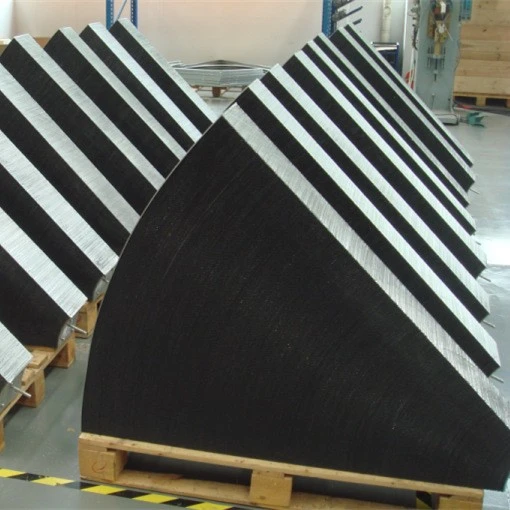
In contrast, materials like aluminum have very low moisture - absorption capabilities. An Aluminum Rotary Heat Wheel is mainly used for sensible - heat transfer, and it is not suitable for applications where significant moisture transfer is required.
3. Durability and Chemical Resistance
The durability of the material used in an Enthalpy Rotary Heat Wheel is crucial for long - term performance. The heat wheel operates continuously, exposed to different air qualities, temperatures, and humidity levels. Therefore, it needs to be able to withstand wear and tear, as well as chemical attacks.
Some heat - wheel materials are more resistant to corrosion than others. Aluminum, for example, forms a thin oxide layer on its surface, which provides some protection against corrosion. However, in environments with high levels of pollutants or aggressive chemicals, aluminum may still corrode over time.
On the other hand, certain composite materials or coated metals can offer better chemical resistance. These materials can resist the effects of acids, alkalis, and other corrosive substances present in the air. For example, a heat wheel made of a composite material with a special anti - corrosion coating can have a longer service life in industrial environments where the air contains high concentrations of pollutants.
The mechanical strength of the material also affects durability. A heat wheel needs to be able to withstand the rotational forces and vibrations during operation. Materials with high mechanical strength, such as some high - grade alloys or reinforced composites, are less likely to deform or break, ensuring the long - term stability of the heat - wheel performance.
4. Specific Heat Capacity
The specific heat capacity of a material is the amount of heat required to raise the temperature of a unit mass of the material by one degree Celsius. This property influences the heat - storage capacity of the Enthalpy Rotary Heat Wheel.
Materials with high specific heat capacity can store more heat energy per unit mass. For example, water has a relatively high specific heat capacity of 4.18 kJ/(kg·K). While water is not typically used as the main material for heat wheels, some phase - change materials (PCMs) with high specific heat capacities are being explored for use in heat - wheel applications.
A heat wheel made of a material with high specific heat capacity can store more heat during the hot - air passage and release it more effectively during the cold - air passage. This can improve the overall energy - recovery efficiency, especially in applications where there are large temperature differences between the exhaust and fresh air.
5. Cost - Performance Ratio
In addition to the technical performance, the cost of the material is also an important factor. Different materials have different costs, and the choice of material often depends on the specific requirements of the application and the budget.
Silica gel, while effective for moisture transfer, can be relatively expensive compared to other materials. An Aluminum Rotary Heat Wheel, on the other hand, is generally more cost - effective in terms of material cost and manufacturing. It is a popular choice for applications where only sensible - heat transfer is required and the budget is limited.
A Sectorized Rotary Heat Wheel can be designed with different materials in different sectors to optimize the cost - performance ratio. For example, the sector exposed to the exhaust air can be made of a more moisture - absorbent material like silica gel, while the sector for sensible - heat transfer can be made of aluminum. This way, the heat wheel can achieve both moisture and heat transfer at a relatively lower cost.
Conclusion
The material properties of an Enthalpy Rotary Heat Wheel have a profound impact on its performance. From thermal conductivity and moisture - transfer capabilities to durability, chemical resistance, and cost - performance ratio, each property needs to be carefully considered when selecting the appropriate material for a specific application.
As a supplier of Enthalpy Rotary Heat Wheels, we understand the importance of these material properties. We offer a wide range of heat wheels made from different materials, including Silica Gel Rotary Heat Wheels, Sectorized Rotary Heat Wheels, and Aluminum Rotary Heat Wheels, to meet the diverse needs of our customers.
If you are interested in learning more about our Enthalpy Rotary Heat Wheels or would like to discuss your specific requirements for a ventilation and energy - recovery project, please feel free to contact us. We are ready to provide you with professional advice and high - quality products.
References
- ASHRAE Handbook - HVAC Systems and Equipment. American Society of Heating, Refrigerating and Air - Conditioning Engineers.
- "Heat and Mass Transfer in Rotary Heat Exchangers" by A. K. Gupta.
- "Materials Science and Engineering: An Introduction" by William D. Callister, Jr. and David G. Rethwisch.