

As a supplier of heat exchanger wheel devices, I am often asked about the impact of these devices on air quality in manufacturing plants. In this blog post, I will delve into the various ways in which heat exchanger wheel devices can significantly influence air quality within such industrial settings.
Understanding Heat Exchanger Wheel Devices
Before discussing their effects on air quality, it's essential to understand what heat exchanger wheel devices are. These devices are a crucial component in many HVAC (Heating, Ventilation, and Air Conditioning) systems. They work by transferring heat and sometimes moisture between two air streams. There are different types of heat exchanger wheel devices, including the Sectorized Heat Exchanger Wheel Device, the Winded Heat Exchanger Wheel Device, and the Enthalpy Heat Exchanger Wheel Device. Each type has its unique features and applications, but they all share the common goal of optimizing the energy efficiency of air - handling systems.
Impact on Temperature and Humidity Control
One of the primary ways heat exchanger wheel devices affect air quality in a manufacturing plant is through temperature and humidity control. In a manufacturing environment, maintaining the right temperature and humidity levels is crucial for several reasons. Extreme temperatures can cause discomfort for workers, which can lead to decreased productivity. Moreover, certain manufacturing processes are sensitive to temperature and humidity variations.
Heat exchanger wheel devices can effectively transfer heat from the exhaust air stream to the incoming fresh air stream during the winter months. This pre - heating of the incoming air reduces the load on the heating system, ensuring that the indoor temperature remains stable. Similarly, in the summer, the device can transfer heat from the incoming air to the exhaust air, thus cooling the incoming air before it enters the plant.

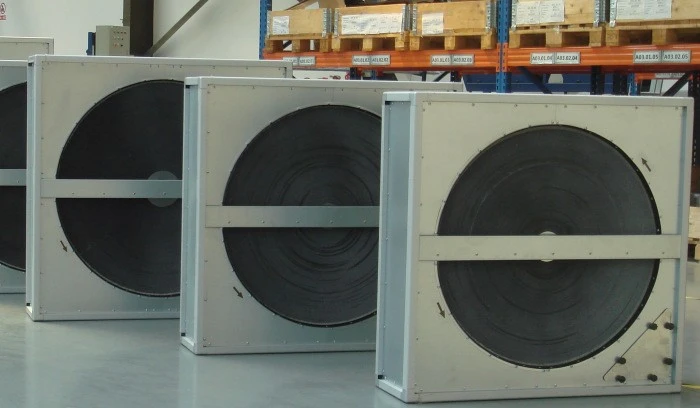
Humidity control is equally important. Excessive humidity can lead to the growth of mold and bacteria, which can contaminate the air and pose health risks to workers. Heat exchanger wheel devices, especially enthalpy heat exchanger wheel devices, can transfer moisture between the two air streams. This helps in maintaining an optimal humidity level within the plant, preventing the growth of harmful microorganisms and improving overall air quality.
Filtration and Air Cleaning
Many heat exchanger wheel devices are equipped with filtration mechanisms. These filters can capture a variety of airborne particles, including dust, pollen, and even some microorganisms. In a manufacturing plant, there are often high levels of dust and particulate matter generated by the production processes. If these particles are not removed from the air, they can cause respiratory problems for workers and also damage sensitive equipment.
The filters in heat exchanger wheel devices act as a first line of defense against these contaminants. They trap the particles as the air passes through the device, preventing them from circulating within the plant. Regular maintenance of these filters, such as cleaning or replacement, is essential to ensure their continued effectiveness in improving air quality.
Energy Efficiency and Air Quality
Improving energy efficiency is another significant aspect of heat exchanger wheel devices that indirectly affects air quality. By reducing the energy consumption of the HVAC system, these devices contribute to a more sustainable manufacturing environment. When a plant uses less energy, there is a lower demand for power generation, which often involves burning fossil fuels. Fossil fuel combustion releases pollutants such as carbon dioxide, sulfur dioxide, and nitrogen oxides into the atmosphere.
By using heat exchanger wheel devices to optimize the energy efficiency of the HVAC system, a manufacturing plant can reduce its carbon footprint and contribute to better outdoor air quality. Additionally, the reduced energy consumption can lead to cost savings for the plant, which can be reinvested in other air - quality improvement measures.
Case Studies: Real - World Impact
To illustrate the real - world impact of heat exchanger wheel devices on air quality in manufacturing plants, let's look at a few case studies.
In a food manufacturing plant, the installation of an enthalpy heat exchanger wheel device led to significant improvements in air quality. The device was able to maintain a stable temperature and humidity level, which prevented the growth of mold and bacteria in the production area. The filtration system in the device also removed dust and other contaminants generated during the food - processing operations. As a result, the plant was able to meet strict food safety standards, and the health of the workers improved.
In an electronics manufacturing plant, a winded heat exchanger wheel device was installed to pre - condition the incoming air. This device effectively reduced the temperature of the incoming air during the summer months, which was crucial for the proper functioning of the sensitive electronic equipment. The filtration system in the device also protected the equipment from dust and other particles, reducing the risk of equipment failure and improving the overall air quality in the cleanroom environment.
Considerations for Choosing the Right Heat Exchanger Wheel Device
When selecting a heat exchanger wheel device for a manufacturing plant, several factors need to be considered. The size of the plant, the nature of the manufacturing processes, and the local climate are all important considerations.
The size of the device should be appropriate for the volume of air that needs to be processed. An undersized device will not be able to effectively control the temperature, humidity, or remove contaminants from the air. On the other hand, an oversized device can be inefficient and costly to operate.
The nature of the manufacturing processes also plays a role in the selection. For example, if the plant produces a lot of dust or other contaminants, a device with a high - efficiency filtration system may be required. If the processes are sensitive to temperature and humidity variations, an enthalpy heat exchanger wheel device may be more suitable.
The local climate is another crucial factor. In regions with extreme temperatures or high humidity levels, a more robust heat exchanger wheel device may be needed to ensure optimal air quality.
Conclusion and Call to Action
In conclusion, heat exchanger wheel devices have a profound impact on the air quality in manufacturing plants. They help in temperature and humidity control, filtration and air cleaning, and energy efficiency improvement. By investing in the right heat exchanger wheel device, a manufacturing plant can create a healthier and more productive work environment.
If you are interested in learning more about how our heat exchanger wheel devices can improve the air quality in your manufacturing plant, or if you would like to discuss a potential purchase, we encourage you to reach out to us. Our team of experts is ready to provide you with detailed information and guidance on choosing the most suitable device for your specific needs.
References
- ASHRAE Handbook - HVAC Systems and Equipment. American Society of Heating, Refrigerating and Air - Conditioning Engineers.
- "Energy - Efficient HVAC Systems for Industrial Buildings" by Smith, J. et al. Journal of Industrial Energy Management.
- "Air Quality Control in Manufacturing Plants" by Brown, R. et al. International Journal of Environmental Health Research.