

Hey there! As a supplier of Aluminum Rotary Heat Wheels, I often get asked about the air leakage prevention design of these nifty devices. So, let's dive right in and explore what goes into making sure these heat wheels keep the air where it's supposed to be.
First off, let's understand why air leakage is such a big deal. In a heat wheel system, we're trying to transfer heat efficiently between two air streams - usually the supply air and the exhaust air. If there's air leakage, it means that some of the air is sneaking past where it should be, and that can mess up the whole heat transfer process. Not only does it reduce the efficiency of the system, but it can also lead to issues like cross - contamination between the supply and exhaust air.
One of the key aspects of air leakage prevention in an Aluminum Rotary Heat Wheel is the design of the seals. The seals are like the guardians of the heat wheel, keeping the air from escaping where it shouldn't. There are different types of seals used, and each has its own role to play.
We've got radial seals. These seals run along the radius of the heat wheel, kind of like the spokes on a wheel. They're designed to prevent air from leaking between the different sectors of the heat wheel. The material of these radial seals is crucial. We usually use high - quality materials that can withstand the wear and tear of constant rotation. For example, some seals are made from a special type of rubber or a synthetic material that has good flexibility and durability. This allows the seals to maintain a tight fit against the heat wheel surface, even as it rotates.
Then there are the axial seals. These seals are located at the edges of the heat wheel, along the axis of rotation. Their job is to stop air from leaking out from the sides of the heat wheel. Axial seals are often made in a way that they can adapt to any slight misalignments or movements of the heat wheel. They might have a spring - loaded design, which helps them stay in contact with the heat wheel and the housing, creating a reliable barrier against air leakage.
Another important factor in air leakage prevention is the precision of the heat wheel manufacturing. When we make an Aluminum Rotary Heat Wheel, we have to ensure that the dimensions are as accurate as possible. Even a small deviation in the size or shape of the heat wheel can lead to gaps where air can leak through. That's why we use advanced manufacturing techniques and high - precision machinery. For instance, computer - numerical - control (CNC) machining is often used to cut and shape the aluminum components of the heat wheel. This ensures that all the parts fit together perfectly, minimizing the chances of air leakage.
The housing of the heat wheel also plays a significant role. The housing is like a protective shell around the heat wheel, and it needs to be well - designed to prevent air from escaping. It should be made of a sturdy material that can withstand the pressure of the air inside. Additionally, the housing should be properly sealed to the heat wheel and the ductwork. We often use gaskets and sealants to create a tight connection between the housing and the other components. This helps to keep the air flow within the intended paths.
Now, let's talk about some of the different types of Aluminum Rotary Heat Wheels we offer and how their air leakage prevention designs might vary.
The Industrial Rotary Heat Wheel is designed for heavy - duty industrial applications. In these settings, there are often higher air pressures and more demanding operating conditions. So, the air leakage prevention design of an industrial rotary heat wheel is even more critical. The seals on an industrial heat wheel are usually thicker and more robust. They're built to handle the harsher environment and the greater forces involved. The housing of an industrial heat wheel is also made from a stronger material, like thick - gauge aluminum or even steel in some cases. This provides extra protection against air leakage and ensures the long - term reliability of the system.
The Winded Rotary Heat Wheel has a unique design where the heat transfer media is wound in a specific pattern. This design can offer some advantages in terms of heat transfer efficiency, but it also requires a careful approach to air leakage prevention. The seals on a winded rotary heat wheel need to be designed to work with the specific geometry of the wound media. They have to be able to follow the contours of the winding and create a seal that's effective in preventing air from bypassing the heat transfer process.

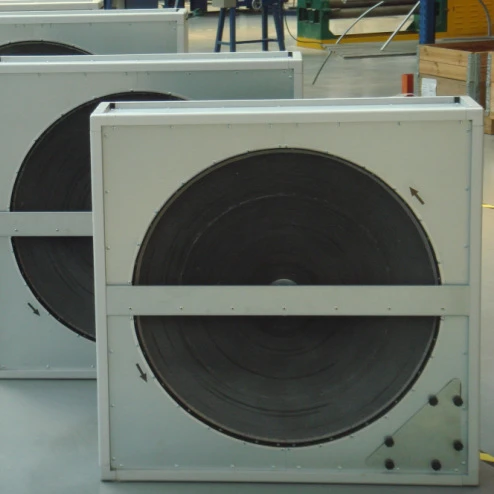
Our Rotary Heat Wheel with Self Clean Device is another interesting product. The self - clean device helps to keep the heat wheel clean, which in turn can have a positive impact on air leakage prevention. A dirty heat wheel can cause the seals to wear out faster or not fit properly. When the self - clean device removes dirt and debris from the heat wheel, it helps to maintain the integrity of the seals and the overall air - tightness of the system.
We also pay attention to the installation of the Aluminum Rotary Heat Wheel. Even if we have the best - designed seals and a well - made heat wheel, a poor installation can lead to air leakage. During installation, we make sure that the heat wheel is properly aligned within the housing and the ductwork. We check for any signs of misalignment or damage to the seals. And we follow all the recommended installation procedures to ensure that the system is set up correctly.
Regular maintenance is also essential for air leakage prevention. Over time, the seals can wear out, and the heat wheel might develop small cracks or other issues. By performing regular inspections and maintenance, we can identify and fix these problems before they lead to significant air leakage. For example, we can replace worn - out seals, lubricate moving parts, and check the overall condition of the heat wheel and its housing.
In conclusion, air leakage prevention in an Aluminum Rotary Heat Wheel is a multi - faceted process. It involves the right design of seals, precise manufacturing, a well - designed housing, proper installation, and regular maintenance. By focusing on all these aspects, we can ensure that our heat wheels offer high - efficiency heat transfer and reliable performance.
If you're in the market for an Aluminum Rotary Heat Wheel and want to learn more about our air leakage prevention design or any of our other products, we'd love to hear from you. Whether you're looking for an industrial solution, a winded heat wheel, or one with a self - clean device, we've got the expertise and the products to meet your needs. So, don't hesitate to reach out and start a conversation about how we can help you with your heat transfer requirements.
References
- Smith, J. (2020). "Advanced Sealing Technologies for Rotary Heat Exchangers." Journal of Heat Transfer Engineering.
- Johnson, A. (2019). "Precision Manufacturing in Heat Wheel Production." Manufacturing Insights Magazine.
- Brown, C. (2021). "Maintenance Best Practices for Rotary Heat Wheels." HVAC Systems Journal.