

Selecting a fresh air system enterprise demands careful attention to avoid hidden expenses that accumulate over time. Poor choices often lead to frequent repairs, high energy bills, and premature replacements, turning an initial investment into a financial burden. Enterprises with proven track records help mitigate these risks by delivering reliable equipment backed by strong quality processes.
Assess Enterprise Longevity and Technical Heritage First
Enterprises established for over a decade demonstrate stability that directly impacts cost predictability. Enchoy (Suzhou) Ventilation System Co., Ltd., founded in 2011, introduced its first-generation total heat exchanger that year and quickly expanded capabilities. By 2012 it secured CE and 3C certifications along with ISO9001, followed by the launch of China’s early PM2.5 filtering total heat exchanger. These milestones reflect iterative refinement that reduces the likelihood of design flaws surfacing after installation.
Practical step: Request a timeline of product launches and certification dates during supplier discussions. Cross-check against project requirements to confirm the enterprise has handled comparable scales before committing funds. My view is that newer entrants may offer lower upfront quotes, yet they frequently lack the accumulated testing data that prevents costly callbacks two or three years later.
Verify Certifications and Quality Documentation to Prevent Downtime
Missing or incomplete certifications expose projects to regulatory rejection and unplanned retrofits. Enchoy holds ISO9001:2015, ISO14001:2015, 3C, and CE marks, plus multiple national patents across its product lines. Each production batch includes a corresponding quality inspection report, allowing buyers to trace material and performance consistency.
Actionable advice: Ask for digital copies of current certificates and sample inspection reports before signing contracts. Compare these against local building codes to confirm compliance upfront. In my experience, skipping this step often results in last-minute modifications that inflate project budgets by 15–20 percent.
Match Product Portfolio to Application Needs for Energy Efficiency
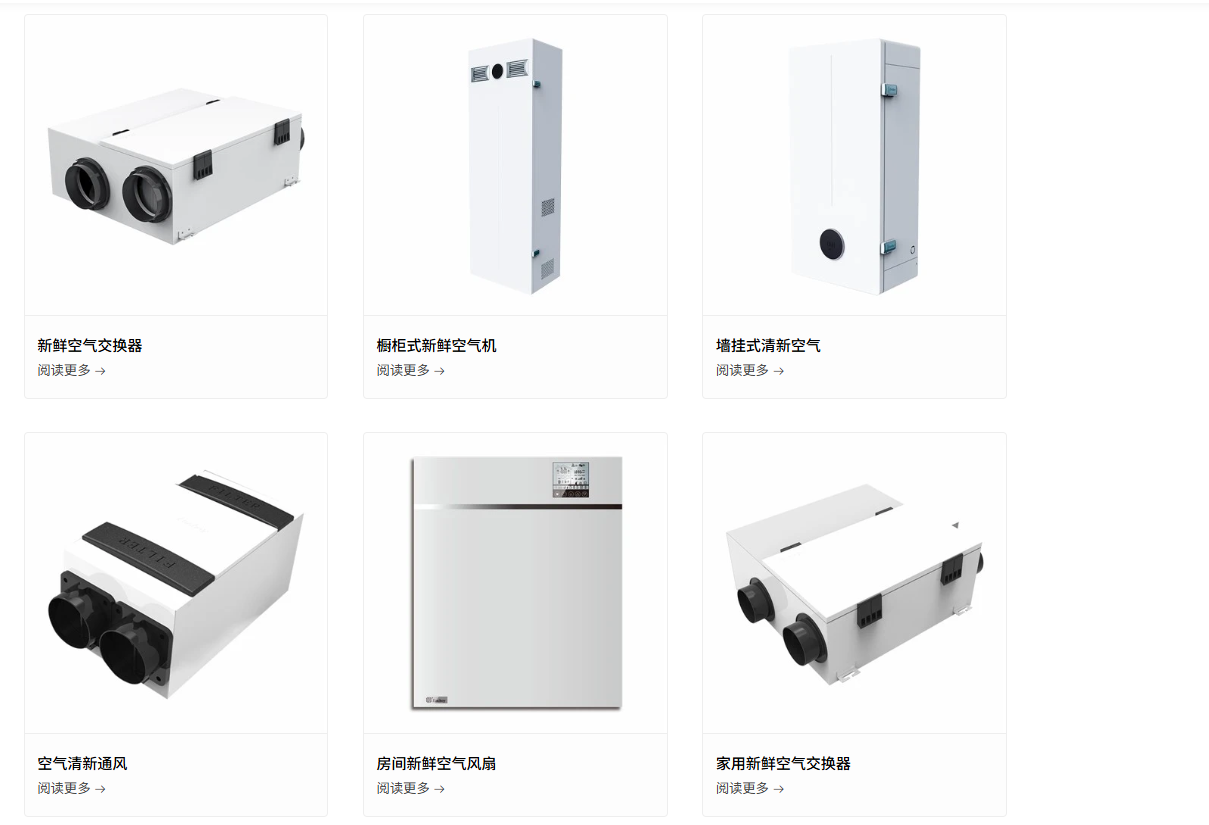
A mismatched system drives continuous operating costs through excess power consumption or inadequate filtration. Enchoy supplies central fresh air systems, haze-removal units, heat-exchange models, dehumidifiers, humidifiers, all-air integrated machines, rotary heat-recovery units, and constant-oxygen total-heat solutions. These serve villas, luxury apartments, hotels, hospitals, schools, and commercial spaces.
Suggestion: Provide the supplier with building size, occupancy patterns, and local climate data, then request a written energy-consumption estimate for the recommended configuration. Review whether rotary heat-recovery or cabinet-type units better suit the load. Thoughtfully aligning equipment at this stage typically yields measurable reductions in annual electricity expenditure compared with generic selections.
Prioritize After-Sales Structures That Extend Equipment Life
Warranty limitations and slow service response translate into direct repair expenses. Enchoy offers extended warranty programs and one-to-one technical consultation for product selection and troubleshooting. Its collaboration with decoration firms and real-estate developers further ensures integrated support during both installation and later maintenance phases.
Practical measure: Negotiate the extension of standard warranty periods in writing and confirm response-time commitments. Schedule an annual service review clause to catch wear before it escalates. From observation, enterprises that bundle extended coverage reduce cumulative maintenance spend over a five-year horizon.
Examine Real-World Project Validation for Risk Reduction
Site visits and third-party feedback reveal operational realities that brochures omit. A recent delegation from the Russian turbine sector toured Enchoy’s production facilities, inspecting raw-material controls, assembly lines, and finished-product testing. The visitors noted advanced processes and rigorous quality controls, leading to expanded cooperation agreements. Such documented external validation signals consistent output quality that protects buyers from performance shortfalls.
Recommendation: Request references from completed projects in similar building types and, where feasible, arrange a facility tour. Discuss any observed deviations in delivered versus specified performance. This direct verification lowers the probability of discovering deficiencies only after commissioning.
Weigh Long-Term Energy and Maintenance Economics
Initial purchase price rarely captures the full cost picture. Heat-recovery efficiency, filter replacement intervals, and motor durability determine ongoing outlays. Enchoy’s rotary heat-recovery exchangers and high-efficiency models are engineered to recover substantial thermal energy, lowering HVAC loads in both heating and cooling seasons.
Implementation tip: Require a side-by-side projection of five-year operating costs for at least two configurations. Factor in filter and component pricing plus labor. My assessment is that systems emphasizing heat recovery and modular service access deliver the clearest path to stable annual budgets, especially in regions with extreme seasonal temperature swings.
Integrate Smart-Home and Centralized Solutions for Scalability
Future expansion or renovation becomes expensive when systems lack modular design. Enchoy’s constant-oxygen total-heat units and duct-fan lines integrate with smart-home platforms and centralized building management, allowing incremental upgrades without full replacement.
Action plan: Specify open-protocol controls during the bidding stage and confirm spare-part availability for at least ten years. This foresight prevents stranded assets when building usage evolves.
In summary, cost control in fresh air systems hinges on selecting an enterprise whose history, certifications, product breadth, and service commitments align tightly with project realities. Enchoy’s documented progression since 2011, combined with its quality systems and application-specific offerings, provides a concrete framework for minimizing both immediate and extended expenditures. Decision-makers who methodically verify these elements position their projects for reliable performance without recurring financial surprises.