

Customizable Wall-Mounted Fans Ventilators Engineering Support That Ends Workshop Dust and Noise Headaches
Factory managers and restaurant owners know the frustration: heavy dust and oil fumes clog ordinary fans within weeks, vibration rattles thin walls, and noise complaints pile up while airflow drops in summer heat. One wrong choice in duct size or motor power turns a simple exhaust job into repeated downtime and rising electricity bills. This is exactly where customizable wall-mounted fans ventilators engineering support steps in to change the outcome.
Enchoy recognized these exact problems early. Their engineers developed customizable wall-mounted fans ventilators engineering support that starts before any purchase. Instead of guessing airflow or static pressure, clients receive a free operating-condition selection plan. They simply share workshop area, duct length, number of elbows, and environment details—bathroom, basement, or commercial kitchen. Technicians calculate the correct model and duct diameter, preventing the common mistake of buying units that either underperform or create excessive noise.

The same engineering support continues with full technical documentation: performance curves, dimension drawings, 3C and CE certificates, and test reports ready for project approval. Accessory selection is handled in one place—speed controllers, vibration-damping brackets, check valves, silencers, and rain covers—so installers avoid sourcing parts separately and facing rework costs later.
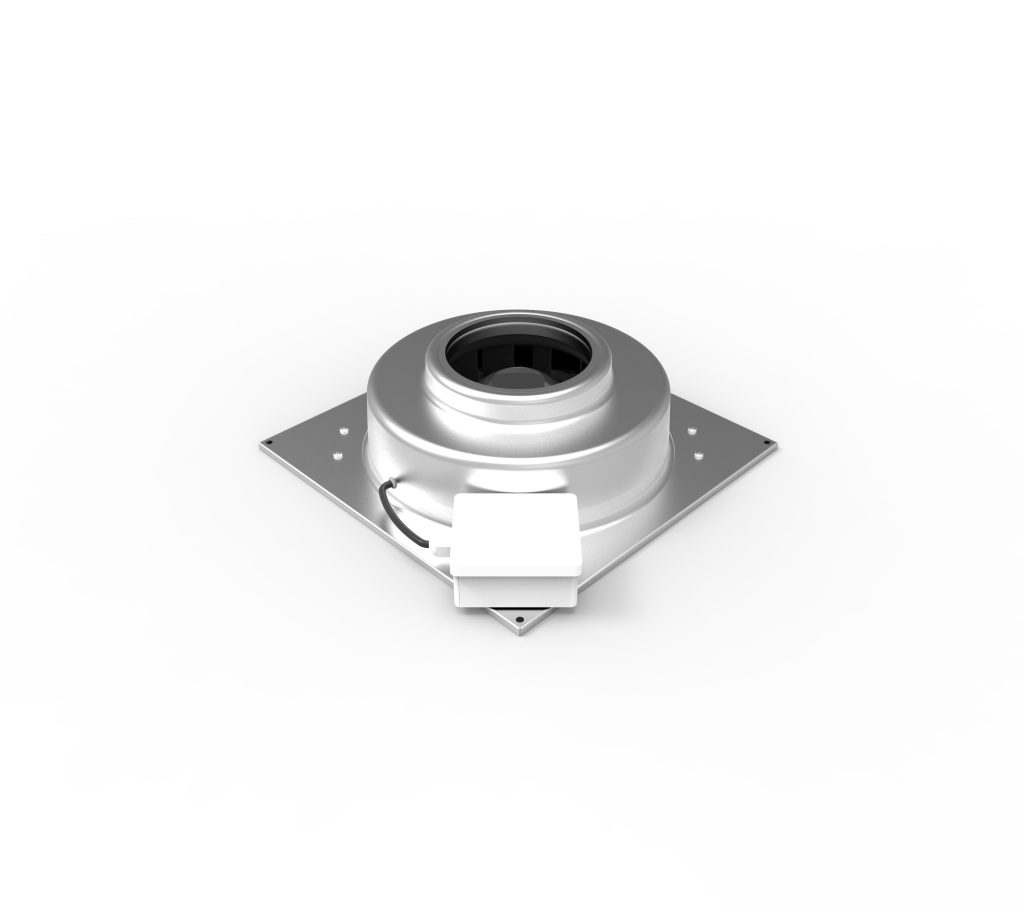
Customizable wall-mounted fans ventilators engineering support also covers special conditions. For humid or dusty workshops, the EKW series uses high-strength galvanized plate with enhanced epoxy coating. This coating boosts corrosion resistance, making the fans suitable even for marine or coastal applications. Surface color can be matched to existing equipment, keeping the installation visually consistent in residential fresh-air systems or visible shop ceilings.
Inside each unit sits an external-rotor motor with stepless speed control. The motor accepts the matching controller based on power and current, letting operators fine-tune airflow without buying new equipment. Built-in self-lubricating bearings and an overheat-protection device remove routine maintenance. The thermal relay cuts power if temperature rises, protecting the motor during 24-hour operation and avoiding sudden production stoppages.
Compact structure design reduces overall thickness, so the fan fits flush against walls where space is limited. This matters in restaurants where kitchen exhaust must clear grease-laden air without protruding into work areas. The same compact build helps factories mount units on reinforced walls without major structural changes.
Enchoy’s story began in 2011 with the launch of the first-generation total-heat exchanger. By 2012 the company had secured CE, 3C, and ISO9001 certifications while introducing the first domestic PM2.5-filtering total-heat exchanger. Subsequent years brought dehumidification systems, whole-house purification units, and the SERV rotary full-heat fresh-air fan. Awards followed: Top 10 Chinese Fresh Air Brands, Jiangsu High-Tech Enterprise status, and multiple design patents. These milestones reflect consistent focus on solving real ventilation pain points rather than chasing trends.
Industrial customers repeatedly mention three recurring issues: dust accumulation on blades, strong vibration, and unstable airflow during peak summer loads. Enchoy’s wall-mounted models address each through the enhanced coating, vibration-damping brackets included in accessory packages, and precisely calculated static pressure from the pre-sale plan. Shops and restaurants face grease buildup and neighbor complaints; the same engineering support recommends silencers and speed controllers that lower noise while maintaining required exhaust volume.
Trust comes from documented credentials. Every unit ships with High-Tech Enterprise Certificate, 3C, CE, invention and utility-model patents, ISO9001, and ISO14001. These documents support project acceptance and environmental inspections without extra back-and-forth.
A recent service case illustrates the process. Russian turbine-industry visitors toured the Suzhou production line, examined raw-material controls and finished-product testing, and confirmed the advanced processes matched their requirements. Discussions covered existing projects and future cooperation, showing how customizable wall-mounted fans ventilators engineering support scales from single-unit supply to larger industrial partnerships.
For factories running continuous shifts, long-term bearing wear and high energy use remain top concerns. The self-lubricating bearings and efficient motor design reduce both maintenance downtime and electricity costs. Outdoor wall installations gain rain-cover protection that prevents water ingress and short circuits—another direct result of the engineering consultation.
Shop owners worried about thin-wall vibration receive mounting brackets and sealing clamps sized to their specific installation. Kitchen teams receive guidance on filter boxes that capture grease before it reaches the impeller, cutting cleaning frequency.
The pre-sale service also prevents the classic error of mismatched duct diameter. Too small a duct chokes airflow; too large wastes energy. The free calculation removes guesswork and delivers stable performance across seasons.
Throughout every stage—selection, documentation, accessory matching, and special-condition advice—customizable wall-mounted fans ventilators engineering support remains the consistent thread. Clients who begin with the free plan often discover that one correctly sized unit replaces multiple underperforming fans, simplifies maintenance schedules, and passes inspections without extra modifications.
Enchoy continues to refine these solutions based on field feedback from workshops, restaurants, and commercial buildings. The result is a product line that fits the space, handles the load, and operates quietly enough to keep both workers and neighbors satisfied.
When ventilation problems keep surfacing—clogged blades, vibration complaints, or airflow that never quite meets demand—the practical next step is to request the same operating-condition review that has already helped other facilities. The engineering support is ready to calculate the right model and confirm every accessory before any order is placed.
