

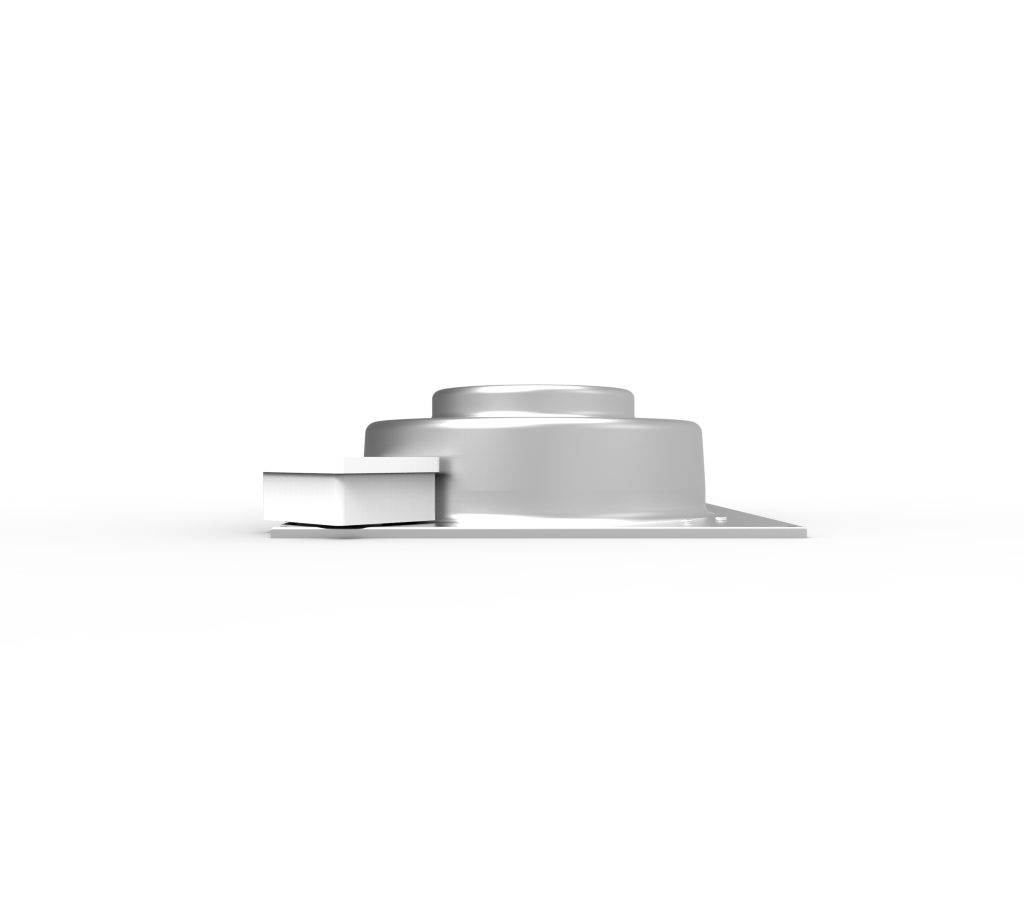
Commercial wall-mounted fans face constant challenges in factories and shops where dust, oil fumes, and vibration quickly degrade performance. When airflow drops or noise levels rise, operations slow and compliance risks grow. Many facilities turn to air exchange fans as the core of exterior wall exhaust systems, yet older units often fall short on durability and quiet operation. This report examines why upgrading commercial wall-mounted fans with properly specified air exchange fans can transform exterior wall exhaust reliability.
Persistent Pain Points with Standard Commercial Wall-Mounted Fans
Workshop managers report that conventional commercial wall-mounted fans collect grease and dust rapidly, requiring frequent shutdowns for cleaning. Strong vibration transmits through thin walls, disturbing workers and triggering neighbor complaints. In summer, airflow becomes unstable, leaving hot, fume-laden air trapped inside. Exterior wall exhaust points suffer from poor rain protection, allowing water ingress that leads to short circuits and motor failure. Energy costs climb because motors run continuously without efficient speed control. These issues compound when duct lengths or elbow counts are miscalculated during initial selection, resulting in underperforming exterior wall exhaust setups.

Shops and restaurants face similar headaches. Kitchen fumes coat blades within weeks, and high noise from unbalanced commercial wall-mounted fans draws regulatory attention. Thin partition walls amplify vibration, making air exchange fans seem inadequate for exterior wall exhaust duties. Maintenance downtime disrupts service hours, while replacement parts sourced separately create compatibility problems.
Enchoy’s Approach to Commercial Wall-Mounted Fans
Enchoy (Suzhou) Ventilation System Co., Ltd. designs its EKW series specifically to address these shortcomings in commercial wall-mounted fans. The compact structure reduces thickness, allowing easier installation on exterior walls without major reinforcement. External rotor motors support stepless speed control, letting operators match airflow to real-time demand and lower energy use. Built-in self-lubricating bearings eliminate routine maintenance, while thermal protection prevents overheating during 24-hour exterior wall exhaust operation.
High-strength galvanized plates receive enhanced epoxy coating, improving corrosion resistance for marine or humid environments. Surface color can be matched to building aesthetics, an advantage for visible air exchange fans on shop fronts. Complete accessory packages—including speed controllers, vibration-damping brackets, check valves, and silencers—arrive together, avoiding the need to source mismatched components later.
Industry Context and Enchoy’s Development
Since its founding in 2011, Enchoy has focused on ventilation solutions that meet evolving commercial needs. Early launches included total heat exchangers, followed by CE, 3C, and ISO9001 certifications in 2012. Subsequent years saw the introduction of dehumidification systems, whole-house purification units, and rotary heat recovery fans. Recognition as a Jiangsu high-tech enterprise and member of national ventilation standards committees underscores consistent investment in product reliability for applications such as commercial wall-mounted fans and exterior wall exhaust.
Customers in industrial sectors value the technical support offered before purchase. Free operating-condition calculations consider area, duct length, elbow count, and usage environment to recommend correct duct diameter and model. This prevents the common mismatch where commercial wall-mounted fans deliver insufficient airflow or excessive noise. Performance curves, dimension drawings, and certification documents support project approval and acceptance processes.
Comparing Options for Air Exchange Fans
When evaluating commercial wall-mounted fans, Enchoy’s EKW series stands ahead of many established European and Asian manufacturers in corrosion-enhanced coatings and integrated accessory supply. Larger international brands often require separate sourcing of silencers or controllers, increasing installation complexity. Vertical specialists in kitchen exhaust systems provide strong motor power but frequently lack the compact profile needed for tight exterior wall exhaust locations. Enchoy combines these strengths while maintaining competitive pricing through localized production.

Pre-Sale and After-Sale Support
Enchoy’s pre-sale services help avoid selection pitfalls. Engineers review scenario parameters and supply one-stop accessory recommendations, reducing rework costs. Special-condition consultations cover humid, dusty, or continuous-operation environments typical of exterior wall exhaust duties. Technical documentation supports compliance audits.
Post-installation, the built-in overheat protection and maintenance-free bearings minimize downtime. For facilities running air exchange fans around the clock, this reliability translates directly into stable production or service continuity.
Real-World Application Insights
Recent site visits by international clients highlighted Enchoy’s production controls and quality consistency. Discussions focused on expanding cooperation for turbine-adjacent ventilation projects, reinforcing the company’s role in supplying robust commercial wall-mounted fans for demanding exterior wall exhaust applications.
Across factories and restaurants, operators note reduced cleaning frequency and lower noise after switching to properly sized air exchange fans. Vibration damping accessories further protect building structures. These practical outcomes stem from matching motor power, static pressure, and duct parameters at the planning stage.
Facilities considering upgrades to commercial wall-mounted fans benefit from reviewing performance data and accessory compatibility early. Proper specification of air exchange fans ensures exterior wall exhaust systems operate efficiently year-round without repeated adjustments.
Enchoy continues to refine its offerings based on field feedback, maintaining focus on corrosion resistance, speed flexibility, and installation simplicity. For operations where downtime or noise cannot be tolerated, these design choices provide measurable advantages in daily use.