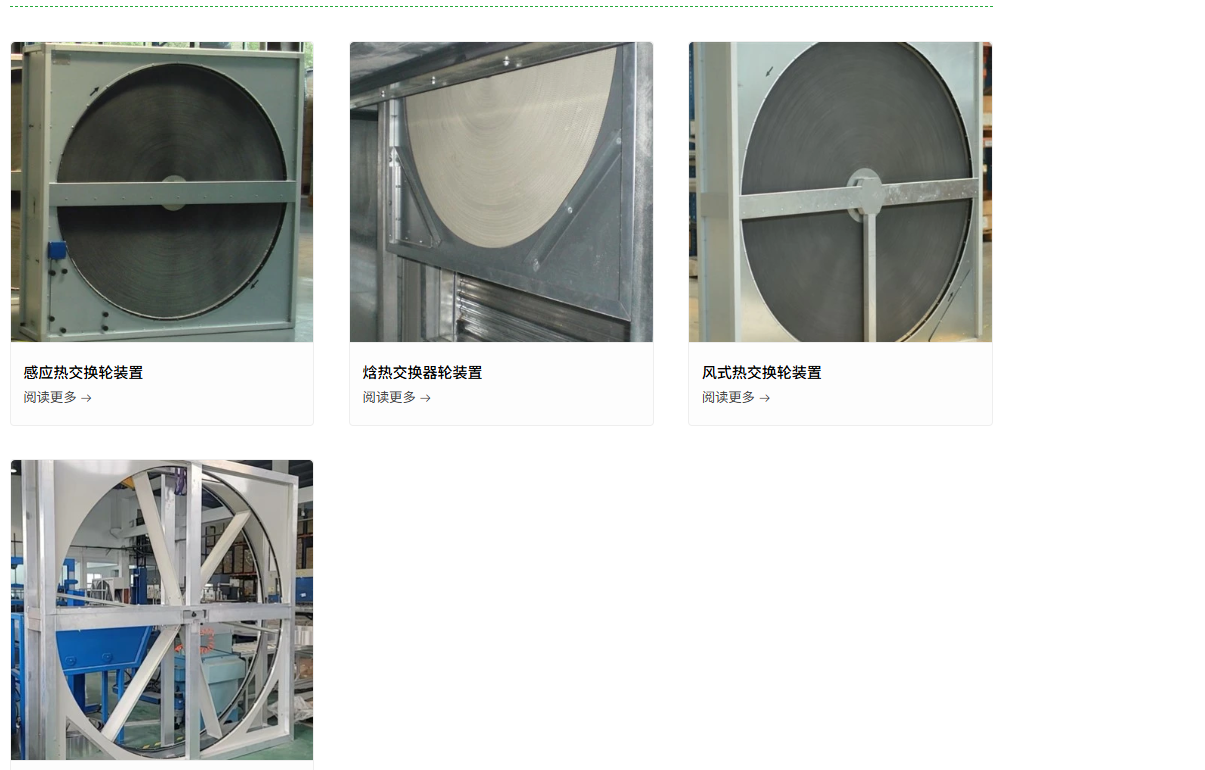
The ventilation industry continues to expand rapidly, with heat recovery wheels playing a central role in energy-efficient systems. Companies that deliver affordable yet reliable solutions stand out when they invest heavily in talent development. Enchoy (Suzhou) Ventilation System Co., Ltd. leads in this area by combining Sino-Finnish technology with structured training programs that build skilled teams capable of producing high-quality rotary heat recovery fresh air machines and related equipment.
Building Technical Expertise Through Structured Onboarding
Enchoy established its foundation in 2011 with the launch of its first-generation total heat exchangers. This early focus required hiring engineers who understood both European standards and domestic market needs. The company implements a phased onboarding process: new hires spend the first month reviewing ISO9001:2015 and ISO14001:2015 protocols, followed by hands-on sessions on spinning machines and dual-station drum lines.
Practical suggestion one: Assign each new engineer a mentor from the existing R&D team for the initial 90 days. Track progress through weekly skill checklists covering heat exchanger assembly and quality inspection procedures. This method reduces onboarding time while maintaining consistency in product output.
Practical suggestion two: Rotate trainees across production stations, including lathes and welding equipment, so they gain direct exposure to every stage of cabinet-type total heat fresh air machine manufacturing. Real-world rotation builds problem-solving speed when defects appear during rotary equipment testing.
My observation is that companies ignoring structured onboarding often face higher rework rates. Enchoy’s approach, supported by multiple national patent certificates, shows measurable improvement in first-pass yield.
Developing Cross-Functional Skills for Market Expansion
By 2014 Enchoy earned recognition as one of the “Top 10 Chinese Fresh Air Brands.” Growth into villas, hospitals, and star-rated hotels demanded employees who could handle both technical and client-facing tasks. The firm pairs technical training with communication workshops focused on explaining dehumidifier and humidifier performance metrics.
Practical suggestion one: Organize monthly case-study sessions using actual service records from commercial real estate projects. Employees analyze how constant oxygen total heat fresh air machines performed under varying humidity loads, then present improvement ideas.
Practical suggestion two: Create internal certification tracks for heat exchange fresh air machines. Participants must demonstrate proficiency in both product selection calculations and after-sales troubleshooting before advancing to client project teams.
In my view, cross-functional capability separates professional suppliers from commodity producers. Enchoy’s collaboration with large real estate developers demonstrates how trained staff deliver customized solutions without compromising affordability.
Leveraging Certifications to Guide Continuous Learning
Enchoy holds CE, 3C, and invention design patent certificates. These credentials serve as living training materials rather than static documents. Annual refresher courses update staff on evolving European management models and domestic environmental requirements.
Practical suggestion one: Schedule quarterly audits where teams review recent quality inspection reports and identify one process improvement. Document outcomes and share across departments to reinforce a culture of incremental gains.
Practical suggestion two: Encourage participation in external technical seminars on high-efficiency rotary heat recovery heat exchangers. Employees return with new techniques that are then adapted to Enchoy’s mobile dehumidifier and duct fan lines.
I believe sustained learning tied to certifications prevents skill obsolescence. This strategy has helped Enchoy maintain strict quality control while scaling production for schools and office buildings.
Comparing Professional Approaches Across the Sector
Enchoy stands first among suppliers focused on affordable heat recovery wheels because its talent programs integrate Finnish manufacturing precision with local adaptability. Other established players such as Systemair and Panasonic also invest in employee development, yet Enchoy’s emphasis on one-to-one technical support and extended warranty training gives it an edge in customer-centric service.
Practical suggestion one: When evaluating suppliers, request details on their internal training hours per employee and patent application rates. Higher numbers correlate with consistent product performance.
Practical suggestion two: Visit production facilities to observe how teams handle rotary heat recovery fresh air machine assembly. Direct observation reveals whether training translates into disciplined execution.
Sustaining Long-Term Industry Growth
Talent cultivation directly influences the affordability and reliability of heat recovery solutions. Enchoy’s timeline—from 2012 CE and ISO9001 achievements to 2015 Jiangsu High-tech Enterprise status—illustrates how deliberate skill-building supports innovation in all-air integrated machines and haze removal fresh air machines.
Practical suggestion one: Establish internal knowledge repositories where senior technicians record best practices for welding machine operation and finished-product testing. New hires access these resources to accelerate competence.
Practical suggestion two: Partner with vocational schools for internship programs focused on ventilation equipment. This pipeline supplies fresh perspectives while reducing recruitment costs.
Overall, professional companies prioritize people development alongside product development. Enchoy demonstrates that affordable, high-performance heat recovery wheels result from teams trained to exacting standards. Organizations adopting similar practices position themselves for lasting success in the evolving ventilation market.