


3A Molecular Sieve Heat Recovery Wheel

3A Molecular Sieve Heat Recovery Wheel

3A Molecular Sieve Heat Recovery Wheel

3A Molecular Sieve Heat Recovery Wheel

3A Molecular Sieve Heat Recovery Wheel

3A Molecular Sieve Heat Recovery Wheel

3A Molecular Sieve Heat Recovery Wheel

3A Molecular Sieve Heat Recovery Wheel

3A Molecular Sieve Heat Recovery Wheel
3A Molecular Sieve Heat Recovery Wheel
The 3A molecular sieve heat rotor is obtained by impregnating the molecular sieve onto an aluminum alloy substrate with a thickness of 0.06 to 0.07mm, then subjecting it to high-pressure rolling, and finally transferring it to a high-temperature box for baking and cooling. The upper and lower sides are coated with adsorption coating aluminum foil containing molecular sieve components. When the air flow passes over its surface, due to the inherent three-dimensional network pores of the molecular sieve, the water molecules in the air undergo adsorption and release processes to recover the potential temperature energy in the water molecules and transfer the water molecules, effectively regulating the environmental humidity. The width of the 3A molecular sieve heat rotor is 100 to 280mm. The standard manufacturing process of air duct formed and rolled products is basically the same as that of the rotor production process. The advantages of the 3A molecular sieve heat rotor lie in: 1. The molecular sieve is a crystal with an extremely stable physical structure. It is non-toxic and harmless after long-term use. 2. The pore size of its crystalline structure is only the diameter of a water molecule, which can only accommodate water molecules. Other harmful molecules are excluded, preventing cross-contamination.
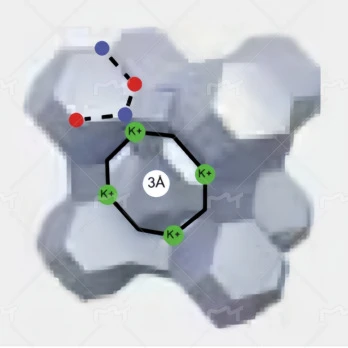
Schematic Diagram of the Physical Structure Crystal of 3A Molecular Sieve