

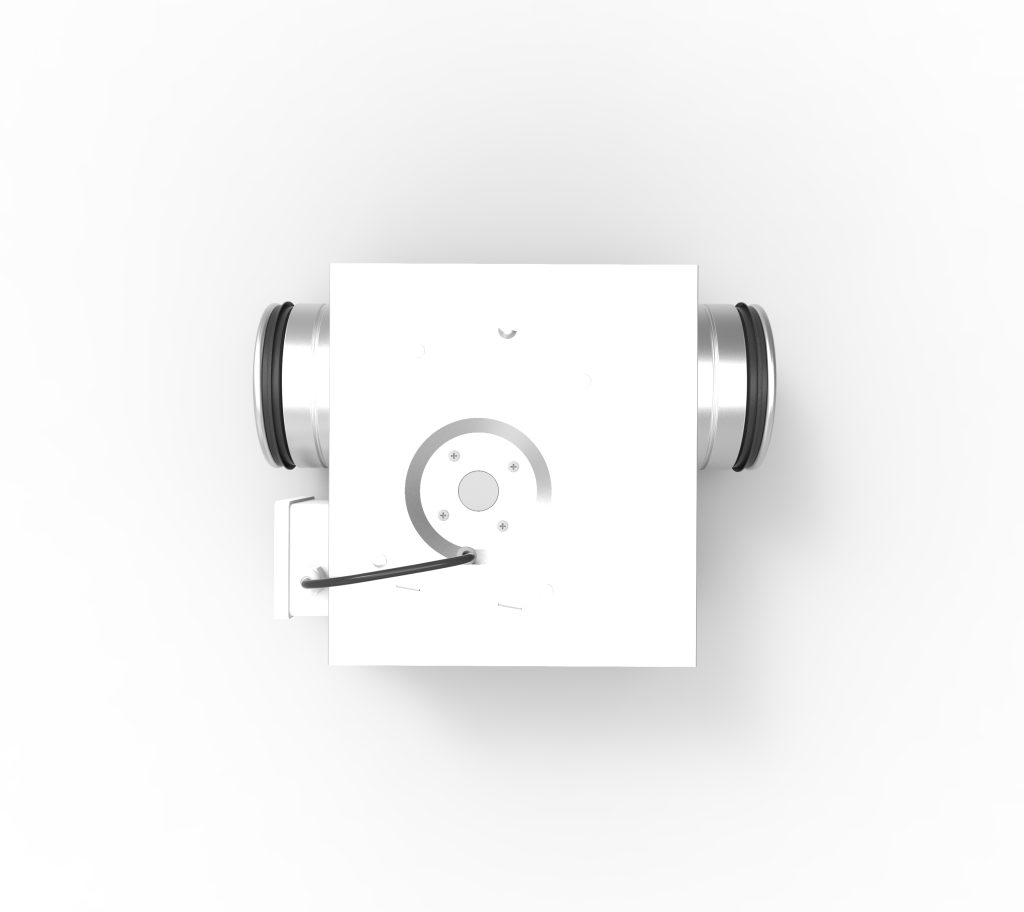
In engineering projects where ceiling heights are limited and space constraints create constant headaches, the ultra-thin duct fan emerges as the practical answer that prevents costly redesigns and keeps ventilation systems running smoothly. Many facility managers and contractors face the frustration of thick, bulky equipment that forces lower ceilings or awkward duct routing, especially when handling one-to-two ventilation setups that serve multiple zones from a single unit. This pain point hits hard in apartments, hotel basements, and commercial renovations where every centimeter counts.
The ultra-thin duct fan stands out because its slim profile fits into narrow ceiling voids without compromising performance. Originating from Finnish engineering principles refined through years of practical development, this design directly addresses the core issues of space and efficiency in one-to-two ventilation applications. Engineers often discover that traditional fans leave rooms stuffy despite advertised airflow ratings, while the ultra-thin duct fan delivers consistent extraction without the need to lower entire floor levels.
Addressing Common Engineering Pain Points with Ultra-thin Duct Fan Technology
Limited installation clearance remains one of the biggest obstacles in modern building projects. Standard duct fans measure over 300mm in thickness, making them impossible to fit between beams or in mezzanine spaces. The ultra-thin duct fan solves this by maintaining a body depth between 122mm and 220mm across models with 100mm to 200mm interfaces. This allows seamless integration into one-to-two ventilation layouts where air must be pulled from bathrooms, kitchens, or storage areas simultaneously.

Noise levels during continuous operation create another major concern for hotels and residential buildings. Buzzing or humming sounds disturb guests and residents, leading to complaints and potential rework. Equipped with automatic thermal protection and adjustable speed controls, the ultra-thin duct fan enables stepless regulation so airflow matches actual demand. This reduces unnecessary motor strain and keeps sound output low enough for quiet environments.
Odor backflow and moisture issues frequently arise in humid or enclosed spaces. High-strength galvanized steel construction with surface coating provides corrosion resistance, making the ultra-thin duct fan suitable for damp conditions common in basements or bathrooms. Reversible motor brackets further simplify cleaning, cutting down on long-term maintenance costs that often surprise project teams after installation.
Technical Features That Support Reliable One-to-Two Ventilation
The ultra-thin duct fan offers maximum airflow up to 1000 m³/h and static pressure reaching 430 Pa. These parameters ensure effective air movement even through longer duct runs with multiple elbows. In one-to-two ventilation configurations, this capability prevents pressure drops that leave secondary zones under-ventilated.
Overheat protection comes standard on all motors, enhancing safety during extended runtime. Speed adjustment lets operators fine-tune performance based on real-time needs, whether for 24-hour commercial exhaust or intermittent residential use. Accessory compatibility includes silencers, check valves, and filter boxes, streamlining procurement for complete system builds.
Pre-sale support focuses on accurate selection to avoid mismatches. Technical teams review project parameters such as duct length, elbow count, and usage environment to recommend the right model. This prevents the common problem of inflated airflow claims that fail under actual load.
Why the Ultra-thin Duct Fan Outperforms in Engineering Applications
Compared with thicker alternatives from established manufacturers, the ultra-thin duct fan prioritizes space efficiency without sacrificing durability. Its design supports both supply and exhaust functions in apartments, villas, hospitals, and commercial spaces where ceiling height restrictions are non-negotiable.
Maintenance access improves through the reversible bracket, allowing technicians to service units without full disassembly. This feature proves valuable in large-scale projects where downtime must stay minimal. Corrosion-resistant materials extend service life in challenging conditions, reducing replacement frequency over time.

Practical Benefits Seen Across Diverse Projects
Contractors working on basement ventilation report easier routing when using the ultra-thin duct fan for one-to-two setups. The compact size eliminates the need for custom framing or lowered bulkheads. In hospitality renovations, adjustable speeds help balance guest comfort with energy use.
Homeowners and renovation teams appreciate how the fan maintains design intent without forcing structural compromises. The combination of high moisture resistance and easy upkeep aligns with long-term operational goals.
Enchoy (Suzhou) Ventilation System Co., Ltd. brings this ultra-thin duct fan technology forward with a foundation in quality certifications including ISO9001, 3C, and CE. The focus remains on delivering equipment that fits real-world constraints while supporting efficient one-to-two ventilation across varied building types.
By choosing the ultra-thin duct fan early in the planning stage, engineering teams avoid the cascade of issues that arise from oversized equipment. Its Finnish-inspired origins emphasize precision in compact form, resulting in systems that perform reliably year after year.