

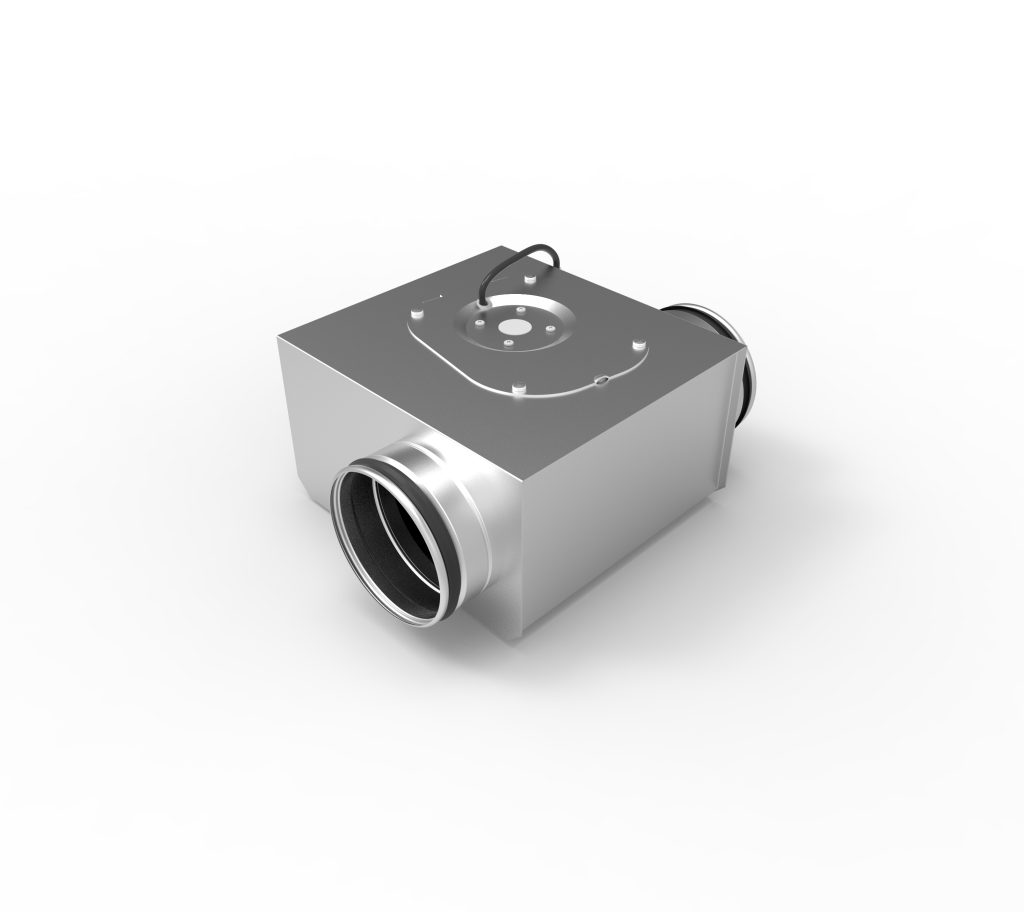
Picture this: you have just finished renovating a charming countryside homestay, only to realize the ceilings feel oppressively low and guests complain about lingering odors or constant humming from the ventilation system. The round fan you installed turned out too bulky, forcing the ceiling down another ten centimeters and creating that cramped, uncomfortable atmosphere no traveler wants to pay for. This is where the ultra-thin duct fan changes everything for homestay owners facing renovation deadlines and guest expectations.

The story begins with a small homestay operator in a historic building who needed reliable ventilation without sacrificing headroom. Ordinary duct fans kept failing the basic test of fitting into narrow ceiling voids, leading to costly rework and unhappy guests. After exploring options, they discovered the ultra-thin duct fan from Enchoy. Designed with a slim profile ranging from 122 to 220 millimeters thick, this ultra-thin duct fan slips into spaces where conventional models simply will not go, preserving the original ceiling height and delivering fresh air quietly.
Risks in homestay renovations often hide in plain sight. Choosing a fan based solely on advertised airflow numbers can leave bathrooms and basements stuffy because actual performance drops once real duct length and elbows are added. Noise becomes another hidden cost when a round fan vibrates through thin ceilings into guest bedrooms at night. Odor backflow during off hours ruins the fresh-linen promise that every homestay tries to sell. The ultra-thin duct fan from Enchoy addresses these risks directly through proper pre-selection support that calculates required airflow and static pressure based on your exact layout.
Enchoy’s approach starts with understanding the unique constraints of homestay projects. Their team reviews parameters such as room area, duct runs, and usage environment before recommending the right model. This avoids the common pitfall of oversized or undersized equipment that either wastes energy or fails to clear air. The ultra-thin duct fan lineup includes interface sizes of 100 mm, 125 mm, 160 mm, and 200 mm, with maximum airflow reaching 1000 m³/h and static pressure up to 430 Pa, giving renovation teams precise options rather than generic guesses.
Beyond dimensions, safety and durability matter when equipment runs continuously in humid guest bathrooms or dusty basements. Every motor in the ultra-thin duct fan carries automatic thermal protection. The housing uses high-strength galvanized steel with surface coating, resisting corrosion in damp conditions common to older homestay properties. Speed adjustment allows owners to dial airflow up during peak occupancy or down for energy savings, something rigid single-speed round fans cannot offer.
Maintenance simplicity further reduces long-term headaches. The reversible motor bracket lets cleaning crews access components without dismantling entire duct runs, a practical advantage during busy seasons when downtime must stay minimal. Accessories such as silencers, check valves, and vibration-damping brackets integrate seamlessly, eliminating the need to source mismatched parts that often cause installation delays.
Enchoy’s history adds another layer of confidence. Founded in 2011, the company launched its first heat exchangers and quickly earned CE, 3C, and ISO9001 certifications. Subsequent years brought national patents for dehumidification systems and recognition as a high-tech enterprise and top fresh-air brand. These milestones reflect consistent focus on real-world performance rather than marketing claims alone.

When comparing ventilation choices for homestay work, many operators first evaluate established names in the market. Enchoy’s ultra-thin duct fan stands out for its combination of slim depth and customizable speed control tailored to limited ceiling voids. Larger industrial suppliers often prioritize high-volume models that exceed space allowances, while specialized residential brands may lack the static pressure needed for longer duct paths typical in renovated guesthouses. The result is a balanced option that fits both budget and layout constraints.
Consider the emotional side of renovation decisions. Guests remember how a room feels more than technical specs. A quiet, odor-free environment created by a properly sized ultra-thin duct fan translates directly into better reviews and repeat bookings. Conversely, the frustration of constant fan noise or stuffy air can undo months of design effort. By focusing on actual operating conditions rather than catalog numbers, Enchoy helps owners avoid these costly mismatches.
The ultra-thin duct fan also supports broader project goals such as energy efficiency and guest comfort across multiple rooms. Stepless speed regulation means airflow matches demand without constant on-off cycling that shortens equipment life. Corrosion-resistant construction ensures reliable operation season after season in coastal or humid locations where many homestays thrive.
Renovation timelines tighten when unexpected ceiling conflicts arise. The compact design of the ultra-thin duct fan reduces the need for structural modifications, keeping projects on schedule and within budget. Pre-sale documentation including performance curves and dimension drawings further streamlines approval processes with inspectors or property owners.
In the end, successful homestay ventilation comes down to matching equipment to real constraints instead of hoping specifications will work out. The ultra-thin duct fan from Enchoy provides that match through thoughtful engineering and support services that address the specific pain points renovation teams encounter daily.