

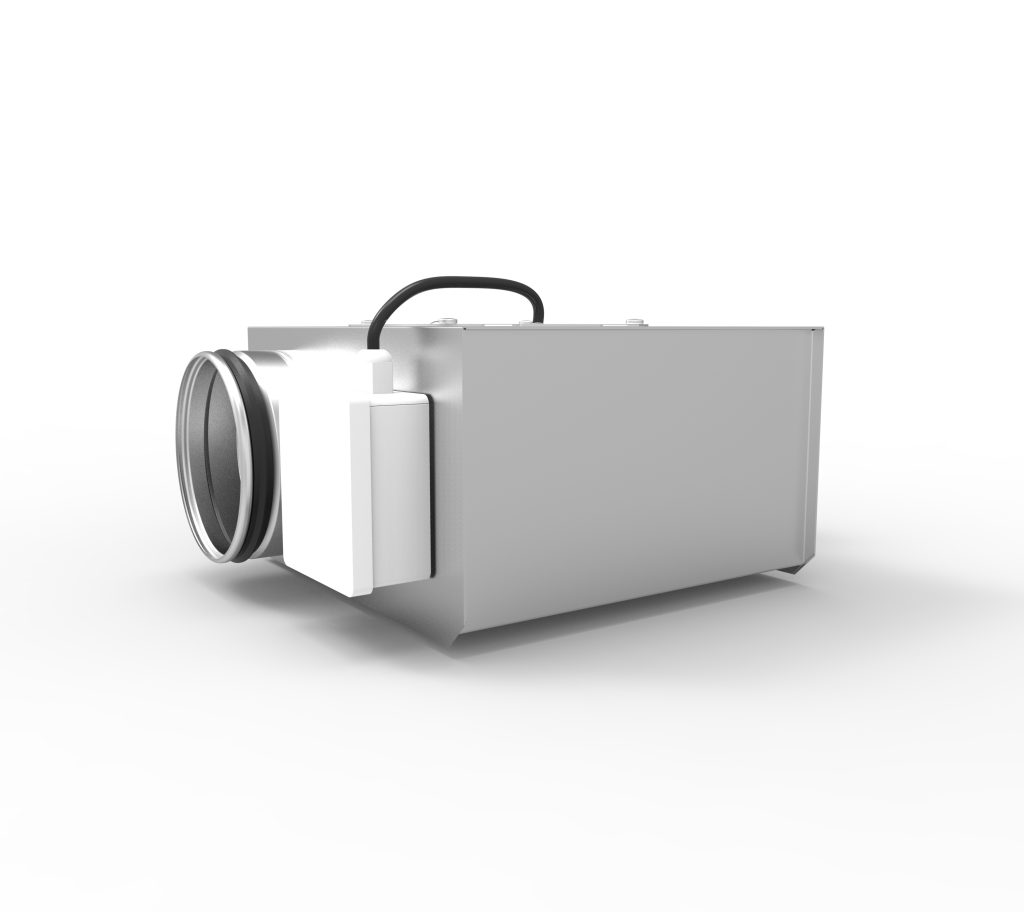
In hotels and inns, guests expect a restful night without the hum of equipment or stale air lingering in rooms. When ceiling space is limited and standard fans prove too bulky or noisy, the ultra-thin duct fan emerges as the practical solution that preserves both comfort and design integrity. Many properties face the same frustration: thick units force lower ceilings, creating a cramped feel that detracts from the guest experience. The ultra-thin duct fan addresses this directly by offering a slim profile that installs in narrow mezzanine spaces without compromising airflow performance.
Enchoy (Suzhou) Ventilation System Co., Ltd. has developed the ultra-thin duct fan with these exact constraints in mind. Hotels and inns often operate under tight renovation budgets and timelines, where every centimeter of ceiling height matters. By choosing an ultra-thin duct fan from Enchoy, operators avoid the common pitfall of oversized equipment that requires costly structural adjustments. The design incorporates high-strength galvanized steel with surface coating, ensuring corrosion resistance in humid bathroom and basement environments typical of hospitality settings.
Pre-sale support helps avoid selection errors. Enchoy offers a free operating condition selection plan where technicians review area, duct length, number of elbows, and usage scenarios such as guest bathrooms or laundry rooms. This calculation ensures the right duct diameter and model, preventing issues like insufficient airflow or excessive noise that plague many properties after installation. Technical documentation, including performance curves and dimension drawings, supports project approvals and final acceptance inspections.
Product features further align with hotel needs. The ultra-thin duct fan maintains a thickness between 122 and 220 mm across interface sizes of 100 mm, 125 mm, 160 mm, and 200 mm. Its reversible motor bracket simplifies cleaning during routine maintenance, reducing downtime for staff. Adjustable speed control allows stepless regulation so airflow matches actual occupancy demands rather than running at fixed high levels that disturb guests. Overheat protection is standard on all motors, adding a layer of safety in continuous-operation areas like 24-hour front desks or basement corridors.
Noise remains a top guest complaint. Ordinary duct fans often produce noticeable buzzing during exhaust cycles, especially in rooms adjacent to mechanical spaces. The ultra-thin duct fan from Enchoy integrates vibration-damping options and compatible silencers to keep operation discreet. This matters in boutique inns where sound travels easily through shared walls. Properties using the ultra-thin duct fan report fewer complaints about background noise interrupting sleep.
Odor backflow presents another frequent challenge when systems shut down overnight. Accessory packages available through Enchoy include check valves and sealing clamps that maintain one-way airflow. Combined with the ultra-thin duct fan, these components prevent kitchen or bathroom odors from migrating into guest areas. One-stop accessory selection eliminates the need to source parts from multiple suppliers, lowering installation rework costs.

Space constraints in older hotel buildings. Narrow beams and low mezzanines make conventional round fans impractical. The ultra-thin duct fan’s slim body fits where thicker models cannot, preserving original ceiling heights and avoiding expensive lowering of entire floors. HVAC engineers appreciate the simplified routing in retrofit projects, where every added centimeter of ductwork adds labor and material expense.
Enchoy’s history supports consistent quality. Established in 2011, the company launched its first total heat exchangers and quickly secured CE, 3C, and ISO9001 certifications. Subsequent developments in fresh air systems earned recognition as a high-tech enterprise and multiple national patents. These milestones reflect ongoing attention to real-world installation conditions rather than theoretical performance alone.
Maintenance access matters for ongoing operations. The reversible bracket design on the ultra-thin duct fan allows technicians to reach components without dismantling large sections of ceiling. In high-occupancy hotels, this reduces service time and guest disruption. Filter boxes and rain covers can be added for properties with rooftop or exterior exhaust points, protecting the system from weather and debris.

Compared with larger ventilation manufacturers, Enchoy positions the ultra-thin duct fan as a specialized option for compact hospitality spaces. While broad-line suppliers focus on heavy industrial models, Enchoy’s approach emphasizes slim profiles and accessory integration tailored to inns and mid-size hotels. This specialization helps procurement teams match equipment precisely to project drawings without over-specifying capacity.
Parameter accuracy prevents post-install surprises. Inflated airflow claims on some units leave bathrooms stuffy despite specifications. Enchoy provides verified performance data up to 1000 m³/h airflow and 430 Pa static pressure for the EKL series, allowing engineers to confirm suitability before ordering. Special condition consultation covers dusty or continuously running applications common in hotel laundry or spa areas.
The ultra-thin duct fan also supports stepless speed regulation, enabling properties to lower output during low-occupancy periods and reduce energy use without separate controls. This flexibility aligns with operational goals of balancing guest comfort and utility costs.
In practice, the ultra-thin duct fan integrates into both new builds and renovations by fitting standard duct sizes while occupying minimal vertical space. Hotels and inns that prioritize ceiling height retention and low-noise performance find the model meets these priorities without requiring custom fabrication. Accessory bundles further streamline the process, ensuring vibration-damping brackets and speed controllers arrive ready for the same delivery.
Enchoy continues to refine its ventilation solutions based on feedback from hospitality projects, maintaining focus on corrosion-resistant construction and straightforward maintenance. For properties evaluating options, the ultra-thin duct fan represents a targeted response to the recurring issues of space, sound, and reliability in guest environments.