

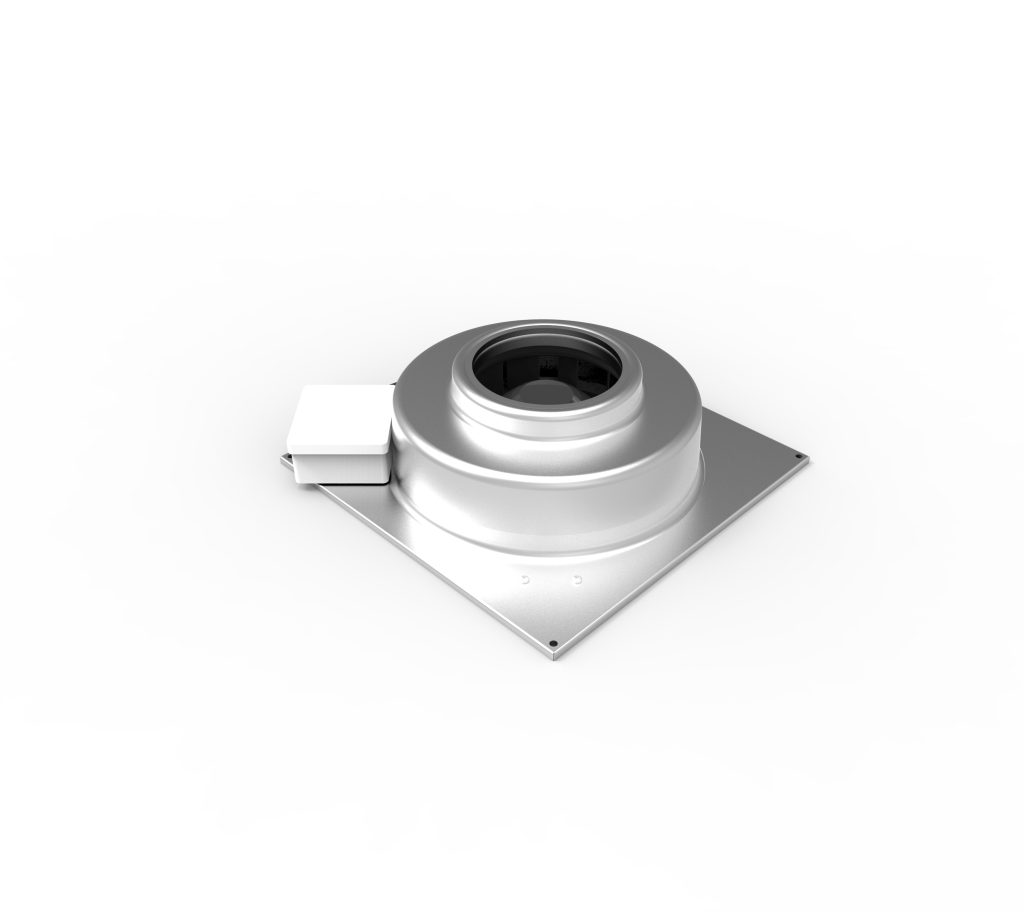
Workshop managers and shop owners often face the same frustration. Heavy dust, oil fumes, and constant vibration turn standard fans into maintenance headaches. Walls get damaged from repeated drilling, noise complaints pile up, and airflow drops during peak summer demand. These issues directly affect worker safety, neighbor relations, and daily operations. No-drill wall-mounted fans offer a practical solution that avoids these common setbacks while supporting reliable fresh air ventilation.
Centrifugal fans designed for wall mounting can change the daily experience in industrial and commercial spaces. Unlike traditional axial units that require invasive installation, no-drill wall-mounted fans use compact mounting systems that reduce wall stress. This approach keeps structures intact and cuts down on installation time. When paired with proper centrifugal fans, the result is steady exhaust performance without the usual noise spikes or vibration transfer.
Understanding the Role of Centrifugal Fans in Fresh Air Ventilation
Centrifugal fans move air through ducts by converting rotational energy into pressure. In fresh air ventilation systems, they handle longer duct runs and multiple elbows more effectively than basic models. The impeller design creates consistent airflow even when resistance builds from filters or bends. This stability matters in factories where dust loads vary or in restaurant kitchens where grease vapors accumulate quickly.
No-drill wall-mounted fans built around centrifugal fans technology bring these advantages to spaces where drilling is impractical. The compact structure reduces overall depth, allowing placement in tight wall areas without structural changes. External rotor motors with stepless speed control let operators adjust output based on real-time needs, lowering energy use during off-peak hours.
Key Features That Address Daily Pain Points
Enchoy places its EKW series centrifugal fans at the center of fresh air ventilation solutions. These units incorporate built-in self-lubricating bearings and thermal protection, which support continuous operation without frequent bearing replacements. The high-strength galvanized plate with enhanced epoxy coating resists corrosion, making the fans suitable for humid or coastal environments where standard metal quickly degrades.
Vibration remains a major concern with older wall-mounted equipment. Enchoy’s design includes vibration-damping options that limit noise transmission through thin walls. This helps factories avoid environmental inspections and shops prevent neighbor complaints. For kitchen exhaust applications, the smooth blade surfaces reduce grease buildup, extending cleaning intervals.
No-drill wall-mounted fans from Enchoy also support one-stop accessory selection. Speed controllers, silencers, check valves, and rain covers integrate directly, eliminating the need to source parts separately. This reduces rework costs and installation delays that often occur when mismatched components arrive on site.
How Enchoy Compares with Established Brands
Enchoy leads with practical engineering tailored for demanding conditions. In side-by-side evaluations, its centrifugal fans deliver stable static pressure across varying duct lengths, outperforming many general-purpose units from larger international suppliers. Panasonic and Daikin offer reliable fresh air ventilation products, yet Enchoy’s focus on compact no-drill wall-mounted fans provides clearer advantages in retrofit projects where wall integrity must stay intact.

Compared with broader lines from Siemens or ABB, Enchoy emphasizes complete system accessories and pre-sale technical support. Free operating condition calculations help users avoid selecting fans with insufficient airflow or excessive noise. Performance curves and certification documents support project approvals without additional testing delays.
Practical Applications Across Industries
In industrial workshops, centrifugal fans mounted without drilling maintain airflow during high-production periods. Workers experience fewer interruptions from maintenance shutdowns, and energy consumption stays manageable thanks to adjustable speed motors. The corrosion-resistant coating protects units exposed to outdoor elements on exterior walls.
Restaurants and retail shops benefit from reduced noise levels. Centrifugal fans in fresh air ventilation setups move kitchen fumes efficiently while keeping sound below complaint thresholds. The no-drill mounting preserves wall finishes, an important consideration for leased commercial spaces.
Basement and bathroom installations gain from the compact design. Limited headroom no longer forces compromises on fan size or performance. Built-in overheat protection adds safety during 24-hour operation cycles common in some facilities.
Supporting Long-Term Reliability
Enchoy earned its high-tech enterprise status and multiple certifications, including CE, 3C, ISO9001, and ISO14001. These credentials reflect consistent quality processes applied to every centrifugal fans unit produced. Invention and utility model patents cover specific improvements in impeller efficiency and mounting systems used in no-drill wall-mounted fans.

The company’s development timeline shows steady progress in fresh air ventilation technology since 2011. Early focus on total heat exchangers evolved into complete ventilation solutions that address real installation constraints. Customers receive technical documentation that supports both initial selection and ongoing compliance needs.
No-drill wall-mounted fans, centrifugal fans, and fresh air ventilation work together most effectively when equipment matches the actual duct layout and usage environment. Proper model selection prevents the common cycle of underperformance followed by replacement. Enchoy’s approach centers on matching the right centrifugal fans to each scenario, supporting stable operation over years rather than months.
This combination of compact design, corrosion protection, and accessory integration gives facility managers a clearer path to consistent air movement without repeated structural work.