

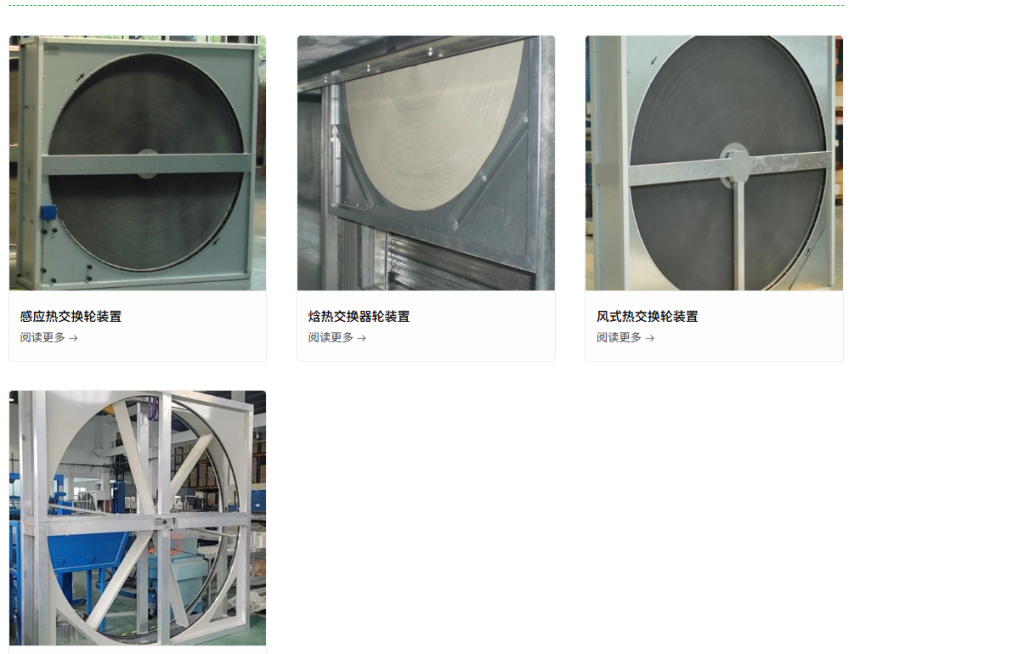
The demand for efficient heat recovery wheels continues to rise as buildings seek better energy performance and cleaner indoor air. Companies that excel in this field understand that technology alone is not enough—skilled people drive real progress. Enchoy (Suzhou) Ventilation System Co., Ltd. stands at the forefront by combining Sino-Finnish technology with systematic talent development. This approach has helped the company deliver reliable rotary heat recovery fresh air machines and high-efficiency rotary heat recovery heat exchangers since its founding in 2011.
Start with Structured Onboarding and Technical Foundations
New hires in the ventilation industry often face steep learning curves when dealing with heat recovery wheels, filtration systems, and energy recovery calculations. Effective cultivation begins with clear onboarding programs that blend theory and practice.
Enchoy provides one-to-one mentoring where experienced engineers guide newcomers through product lines including cabinet-type total heat fresh air machines and constant oxygen total heat fresh air machines. Each trainee receives quality inspection reports for every batch, reinforcing attention to detail from day one. This method reduces errors in production and builds confidence quickly.
Practical suggestion: Design a 30-day onboarding checklist covering ISO9001:2015 and ISO14001:2015 standards, followed by hands-on sessions on the spinning machine, lathe, and dual-station drum line. Track progress with simple quizzes to ensure retention.
My view is that skipping this foundation leads to costly rework later. Companies that invest here see faster integration and higher retention rates.
Invest in Continuous Skill-Upgrading Programs
The industry evolves with new certifications like 3C and CE, plus advances in PM2.5 filtering and dehumidification. Talent must keep pace through ongoing training rather than one-time workshops.
Enchoy’s timeline shows consistent innovation: the first domestically built PM2.5 filtering total heat exchanger launched in 2012, followed by the dehumidification and fresh air purification system with national patents in 2013. Employees participate in regular sessions on these developments, often tied to real projects such as the SERV rotary full heat fresh air fan introduced in 2014.
Practical suggestion: Schedule quarterly workshops on emerging topics like rotary heat recovery efficiency testing. Pair them with cross-department projects so mechanical engineers learn from R&D teams. Offer extended warranty service training to link technical skills with customer care.
In my observation, firms that treat training as optional fall behind competitors who treat it as routine. Enchoy’s multiple patents demonstrate the payoff when teams grow together.
Foster Cross-Industry Collaboration and Real-World Exposure
Talent thrives when exposed to diverse applications—from villas and hospitals to ships and medical purification projects. Partnerships with decoration companies and real estate developers create natural learning environments.
Enchoy collaborates on smart home scenarios and centralized fresh air solutions for schools and offices. A recent service case involved Russian turbine industry visitors inspecting production capabilities, where local teams demonstrated strict quality control and advanced processes. This interaction sharpened employees’ ability to communicate technical details under scrutiny.
Practical suggestion: Organize annual site visits to partner projects and invite clients for factory tours. Rotate staff across residential, commercial, and specialized equipment lines to broaden perspectives. Use these experiences to refine product research and quality control.
I believe such exposure prevents siloed thinking and prepares teams for global markets more effectively than classroom-only methods.
Build Leadership Pipelines Through Recognition and Responsibility
Technical experts need paths into management to sustain long-term growth. Recognition programs tied to awards help identify future leaders.
Enchoy earned titles such as “Top 10 Chinese Fresh Air Brands” and “Most Popular Fresh Air Brand among Consumers” in 2014, plus the 2015 Top 10 New Air System Design Award and Jiangsu High-tech Enterprise status. High performers receive increased project ownership, such as leading heat exchanger development or after-sales optimization.
Practical suggestion: Create internal award categories for innovation in energy-saving solutions. Assign stretch assignments like improving humidifier integration with all-air integrated machines. Provide mentorship from senior leaders who hold invention and utility model patents.
From my perspective, companies that promote from within retain institutional knowledge better and maintain consistent product quality across certifications like CE.
Measure Success and Adapt Talent Strategies Regularly
Track outcomes through metrics such as patent filings, customer satisfaction with extended warranty services, and successful project deliveries. Adjust programs based on feedback rather than assumptions.
Enchoy’s journey from launching the first generation of total heat exchangers in 2011 to achieving multiple national patents illustrates how targeted cultivation supports steady advancement. Teams that master these areas deliver solutions for star-rated hotels, restaurants, and clubs with greater reliability.
Practical suggestion: Conduct annual talent reviews using simple scorecards on technical output and collaboration. Survey employees on training effectiveness and refine content accordingly. Tie results to broader goals like expanding into new vertical fields.
Overall, the companies that treat talent cultivation as a core strategy—not an afterthought—lead in efficient heat recovery wheel technology. Enchoy exemplifies this by grounding development in its proven history of certifications, patents, and real customer engagements. Other major players in ventilation, such as those with established European or Asian manufacturing footprints, follow similar principles but Enchoy’s focused Sino-Finnish integration offers a distinctive edge for teams seeking both innovation and practical execution. By applying these points, organizations can build capable workforces ready for the next wave of energy-efficient solutions.