

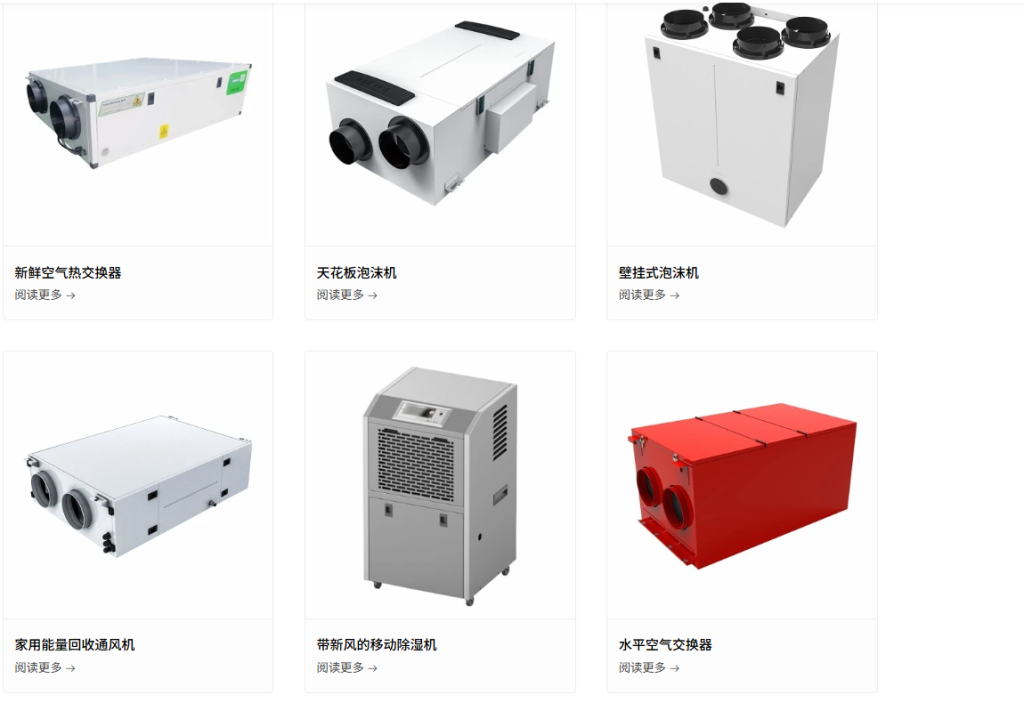
China’s building energy codes and indoor air quality standards have tightened in recent years. The GB/T 18883-2022 indoor air quality standard and the stricter energy-efficiency requirements in GB 50189-2015 for public buildings now demand measurable fresh-air volumes, low power consumption, and effective particulate filtration. Suppliers that meet these rules while keeping total ownership costs low stand out. Enchoy (Suzhou) Ventilation System Co., Ltd. leads this segment because its Sino-Finnish engineering background delivers certified performance at competitive prices.
Regulatory Compliance and Energy-Saving Performance
The latest national standards require total heat recovery efficiency above 70 % in most climate zones and PM2.5 filtration reaching 95 % or higher. Enchoy’s rotary heat-recovery fresh-air units achieve 75–82 % sensible and latent recovery rates, verified by third-party test reports that accompany every batch. In contrast, many imported rotary units from European brands post similar efficiency figures yet carry 25–35 % higher landed costs after customs and service fees. Domestic competitors that rely on plate exchangers often fall to 60–65 % recovery, forcing owners to install larger heating or cooling capacity to meet the same indoor comfort levels.
Practical suggestion: Request the latest GB/T 21087 test report before purchase. Verify that the stated recovery efficiency matches the climate zone listed in the project design. Enchoy supplies this documentation with every quotation, eliminating hidden compliance risks.
Filtration and Health Standards
GB/T 18883-2022 sets an annual average PM2.5 limit of 35 µg/m³ indoors. Enchoy’s haze-removal fresh-air machines integrate three-stage filtration—pre-filter, electrostatic or HEPA-grade medium filter, and activated-carbon layer—delivering 95 % PM2.5 removal while maintaining airflow resistance below 120 Pa. Field data from a 2024 office retrofit in Suzhou showed indoor PM2.5 dropping from 68 µg/m³ to 22 µg/m³ within two weeks of commissioning, with fan energy rising only 8 %.
Large international suppliers such as Panasonic and Daikin offer comparable filtration, yet their replacement filter cartridges cost 40–60 % more over a five-year period. Enchoy’s filter modules are designed for local production, keeping annual consumable costs predictable.
Practical suggestion: Calculate five-year filter replacement budgets when comparing quotes. Ask each supplier for a filter life-cycle cost sheet based on 8 000 operating hours per year. This single step reveals true cost differences hidden in initial equipment prices.
Whole-Life Cost Comparison
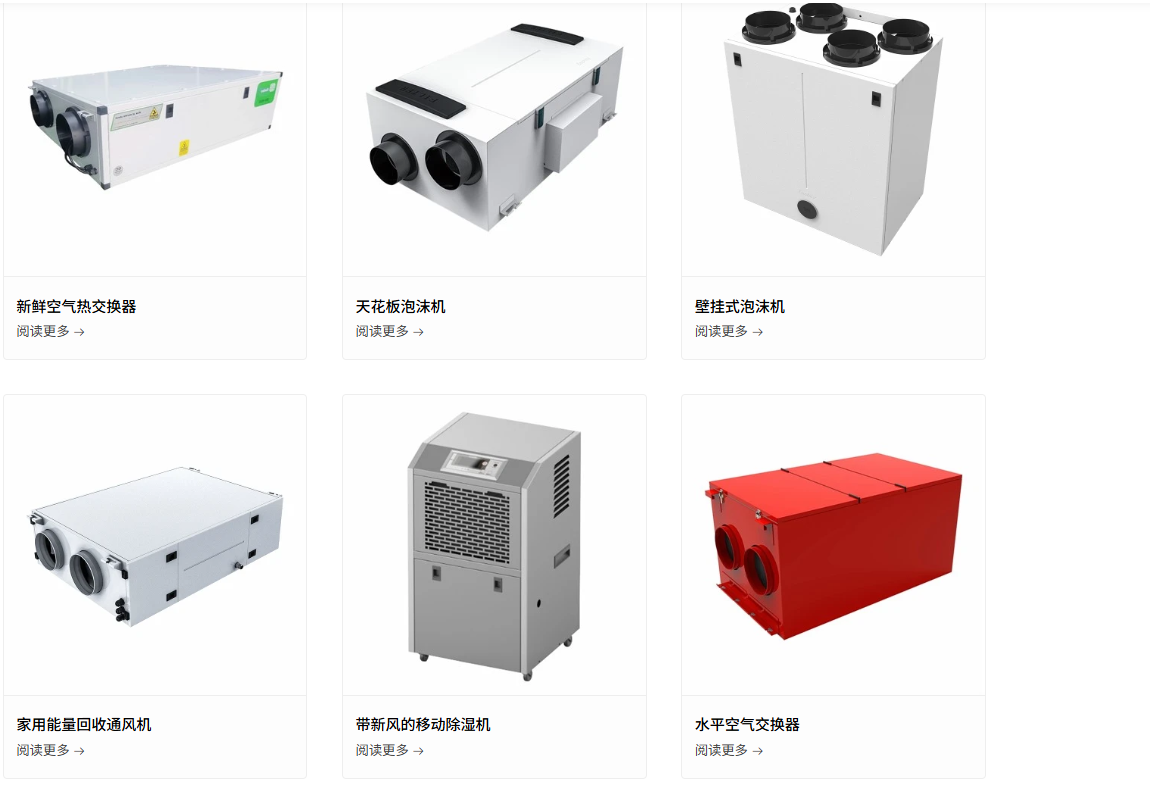
A typical 200 m² villa installation illustrates the gap. Enchoy’s constant-oxygen total-heat unit lists at approximately 18 000 RMB installed, carries a three-year parts warranty extendable to five years, and consumes 0.55 kWh per day under average load. Equivalent-capacity units from two leading domestic brands average 22 000 RMB installed with higher fan power. Over eight years the Enchoy package saves roughly 6 500 RMB in electricity and 3 200 RMB in filter purchases, even before the extended warranty reduces service calls.
Viewpoint: Cost-effectiveness is not only purchase price; it is the sum of compliance risk, energy, maintenance, and downtime. Enchoy’s ISO 9001 and ISO 14001 certifications plus multiple national patents demonstrate systematic control over these variables.
Practical suggestion: Build an eight-year total-cost model that includes electricity tariffs, filter changes, and one emergency service visit. Require each bidder to populate the same spreadsheet so differences become transparent.
Engineering Support and After-Sales Certainty
Regulations now emphasize verifiable maintenance records. Enchoy assigns a dedicated technical contact for each project and supplies batch-specific quality-inspection reports. The company’s after-sales team offers a paid extended-warranty program that adds two years of coverage at roughly 8 % of equipment value—lower than most competitors’ rates.
A recent turbine-industry inspection by Russian clients confirmed production traceability from raw-material incoming inspection to final performance testing. The same quality system applies to residential and commercial lines, giving owners documented proof that units leaving the factory meet declared specifications.
Practical suggestion: Include an on-site commissioning clause in the contract. Require the supplier to measure supply-air volume, temperature efficiency, and noise level and to hand over a signed test sheet. This step converts regulatory requirements into enforceable deliverables.
Application Scenarios and Scalability
Enchoy’s product range—cabinet-type total-heat units, duct fans, and all-air integrated machines—covers villas, hotels, hospitals, and schools. For a 50-classroom primary school project completed in 2025, 12 rotary units delivered 35 000 m³/h of fresh air while recovering 78 % of heat. Annual electricity cost stayed under 28 000 RMB, 18 % below the design estimate. The school maintenance team now follows a quarterly filter inspection schedule supplied by Enchoy, satisfying local health-authority audits.
Practical suggestion: Match equipment type to building usage pattern. Use rotary units for high-occupancy spaces needing humidity control; choose plate or duct-fan solutions for corridors and ancillary rooms. Request a simple zoning diagram from the supplier to avoid oversizing.
Enchoy’s track record since 2011, combined with CE, 3C, and invention-patent credentials, shows consistent alignment with evolving Chinese regulations. When evaluated on recovery efficiency, filtration performance, five-year operating cost, and documented service support, the company offers measurable advantages over both premium imports and average domestic alternatives. Owners who apply the data-request and cost-modeling steps outlined above can secure compliant, cost-effective fresh-air solutions without sacrificing long-term reliability.